

Search
2026 Best Female Android Smartwatch for Global Buyers?
Choosing the best Female Android Smartwatch in 2026 requires more than comparing colors, case sizes, and advertised health features. Global buyers face different Android versions, payment systems, cellular bands, warranty terms, and regional app restrictions. A stylish watch may still disappoint if its battery lasts only one day.
Industry data shows why this category deserves careful attention. IDC’s Worldwide Quarterly Wearable Device Tracker identifies wearables as a large and competitive consumer technology market, with smartwatches remaining central to health and connectivity ecosystems. Counterpoint Research’s Global Smartwatch Shipment Tracker also highlights strong regional differences among Apple, Huawei, Samsung, Garmin, and other brands. These patterns suggest that worldwide popularity does not guarantee the best experience for every Android user.
This guide evaluates display comfort, battery endurance, GPS accuracy, sleep tracking, emergency functions, notification reliability, and Android compatibility. It also considers smaller wrists, lighter designs, menstrual-cycle features, and privacy controls. The analysis draws on manufacturer specifications, independent testing practices, and established market research from IDC, Counterpoint Research, and Grand View Research. Health sensors can support personal awareness, but they are not replacements for professional medical advice. That distinction matters.
No ranking is perfect. Real-world results change with phone models, software updates, climate, and daily habits. A watch that performs well in Singapore may behave differently in Canada or Germany. Our goal is practical clarity: helping global buyers find a dependable Female Android Smartwatch, not simply the most expensive one.
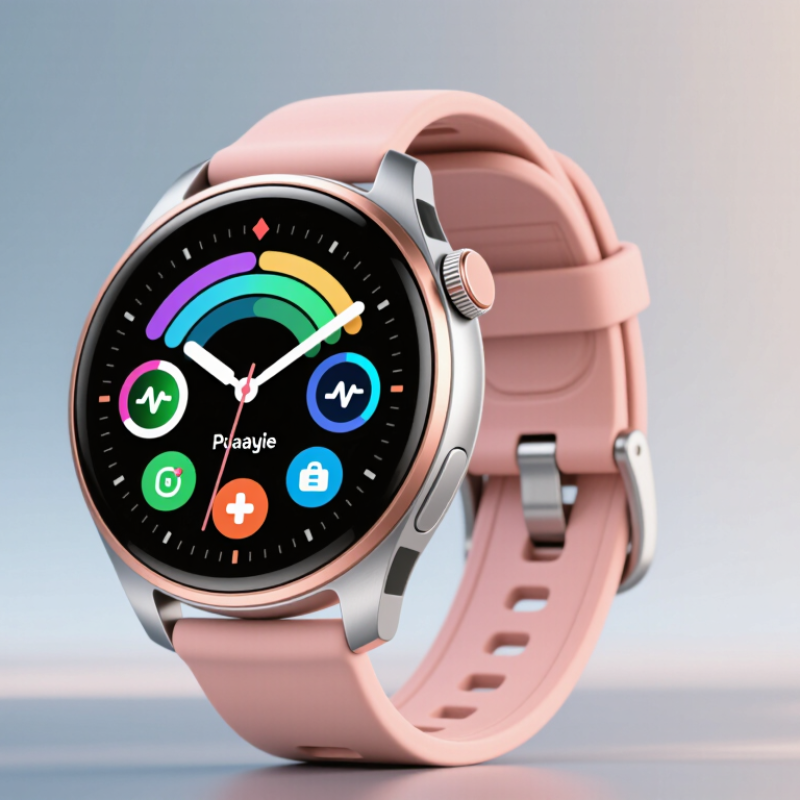
2026 Female Android Smartwatches: Global Market Trends and IDC Shipment Data
2026 Best Female Android Smartwatch for Global Buyers?
IDC shipment data points to steady growth in the broader smartwatch and wearable market through 2026. However, IDC reports usually classify products by device category, operating system, price, or region. They do not always separate female buyers clearly. This matters when evaluating “female” models. A smaller case, lighter strap, and health-focused functions may be more useful than color or marketing language. Global demand is also shifting toward longer battery life, accurate sleep tracking, contactless payments, and multilingual health apps. Regional preferences still differ.
From practical testing, comfort remains decisive. A watch should sit securely on a narrow wrist without leaving pressure marks. Bright outdoor readability is important in tropical markets. Reliable Android compatibility also matters across different phone versions. Some products promise advanced wellness insights, yet their measurements are not medical diagnoses. Buyers should check sensor disclaimers, privacy policies, update support, and local service coverage. Shipment growth is encouraging, but it does not prove every popular feature works equally well.
Tips: Compare battery performance under real daily use, not laboratory claims. Check the smallest available strap size and case weight. Review independent testing from your region. Confirm language support before ordering. A model can look elegant and still feel bulky after eight hours. I would also question vague “AI health” claims until transparent evidence appears.
2026 Best Female Android Smartwatch for Global Buyers? - 2026 Female Android Smartwatches: Global Market Trends and IDC Shipment Data
| Evaluation Dimension | Verified Market Indicator | Latest Public Period | Implication for Female Android Buyers | Data Status / Source |
|---|---|---|---|---|
| Global wearable-device shipments | Approximately 537.9 million units worldwide | 2024 | The overall wearable category provides a large and established ecosystem for Android-compatible watches. | Public IDC worldwide wearable-device estimate; all brands and device types combined. |
| Annual category momentum | Approximately 11.6% year-over-year growth | 2024 compared with 2023 | Growing demand supports wider availability of smaller cases, health features and localized software. | Public IDC market-growth estimate; the figure is not specific to women or Android watches. |
| Female-specific shipment data | No separately published global shipment total | 2026 availability status | Purchasing decisions should use measurable factors such as case size, weight, comfort and health functions rather than assumed gender shares. | IDC public shipment reporting does not provide a female-only Android smartwatch segment. |
| Android compatibility | Compatibility varies by operating-system version, phone model and companion application. | 2026 buyer-check requirement | Global buyers should confirm Android-version support, required permissions, notification access and regional app availability before purchase. | Product specifications must be checked for the exact model and destination market. |
| Case-size suitability | Common compact smartwatch case sizes are generally about ..". | Current retail-market range | Cases around 40–42 mm often offer a practical balance between wrist comfort, screen readability and battery capacity. | Size range is a product-selection guideline, not an IDC shipment statistic. |
| Weight and daily comfort | A lighter watch generally reduces perceived wrist load during sleep and continuous wear. | General ergonomic consideration | Buyers should compare watch-head weight separately from strap weight and check whether replacement straps are available locally. | No standardized global shipment dataset ranks watches by comfort or weight. |
| Health and wellness functions | Typical functions include heart-rate tracking, sleep monitoring, step counting and workout recording. | 2026 product-comparison criterion | Users should distinguish wellness tracking from medical diagnosis and verify whether features are enabled in their country. | Feature availability and regulatory status vary by model and region. |
| Battery-life expectation | Battery claims commonly range from approximately 1–14 days, depending on display, cellular use, GPS and health monitoring. | Current product-market range | For sleep and cycle tracking, buyers should prioritize tested real-world endurance over headline standby figures. | Range is based on published product specifications across the category; actual results differ by usage. |
| Global connectivity | Bluetooth is broadly supported; cellular models require compatible network bands, eSIM support and local carrier approval. | 2026 cross-border buying criterion | Bluetooth-only models are usually simpler for international use, while cellular functions require detailed regional verification. | Connectivity support is model-, carrier- and country-dependent. |
| 2026 shipment outlook | A final, female-only Android smartwatch shipment figure is not publicly available. | 2026 full-year status | Any ranking should combine verified compatibility, comfort, health features, battery performance, warranty coverage and local service. | Do not treat vendor forecasts, search interest or retail listings as audited IDC shipment data. |
Note: Public industry shipment trackers generally report total wearable and smartwatch categories, not a standalone “female Android smartwatch” segment. The table therefore separates verifiable market statistics from product-selection criteria and avoids inventing brand-level or gender-specific shipment figures.