
Search

7 Best Aerosol Production Line Manufacturers?

Choosing the right Aerosol Production Line requires more than comparing machine prices. Buyers must examine filling accuracy, valve insertion, crimping control, leak testing, coding, and service response. A dependable line should run smoothly beside operators, not create constant interruptions.

The global aerosol market continues to expand. Grand View Research valued it at approximately USD 74.94 billion in 2023 and projected a 6.5% compound annual growth rate from 2024 to 2030. MarketsandMarkets also estimated the aerosol cans market at USD 10.5 billion in 2023, with further growth expected through 2028. These figures indicate stronger demand for efficient, flexible, and compliant production equipment.

As aerosol packaging specialist John D. Floros observes, “Process consistency is the foundation of reliable packaging performance.” That principle matters on the factory floor. A poorly calibrated crimping head can cause visible defects, wasted propellant, or rejected batches. Small errors become expensive quickly.

This guide reviews seven leading Aerosol Production Line manufacturers through practical criteria, including engineering experience, automation capability, quality systems, customization, safety design, and after-sales support. Public company information, technical documentation, market research, and manufacturing reputation inform the comparison. However, no ranking is perfect. A line suitable for household cleaners may not fit pharmaceutical or personal-care products.

The strongest manufacturers usually provide more than equipment. They offer commissioning support, operator training, spare parts, validation documents, and measurable production data. Readers should still verify current certifications and regional service coverage before purchasing.
7 Best Aerosol Production Line Manufacturers?

Aerosol Production Lines: Functions, Components, and Manufacturing Standards

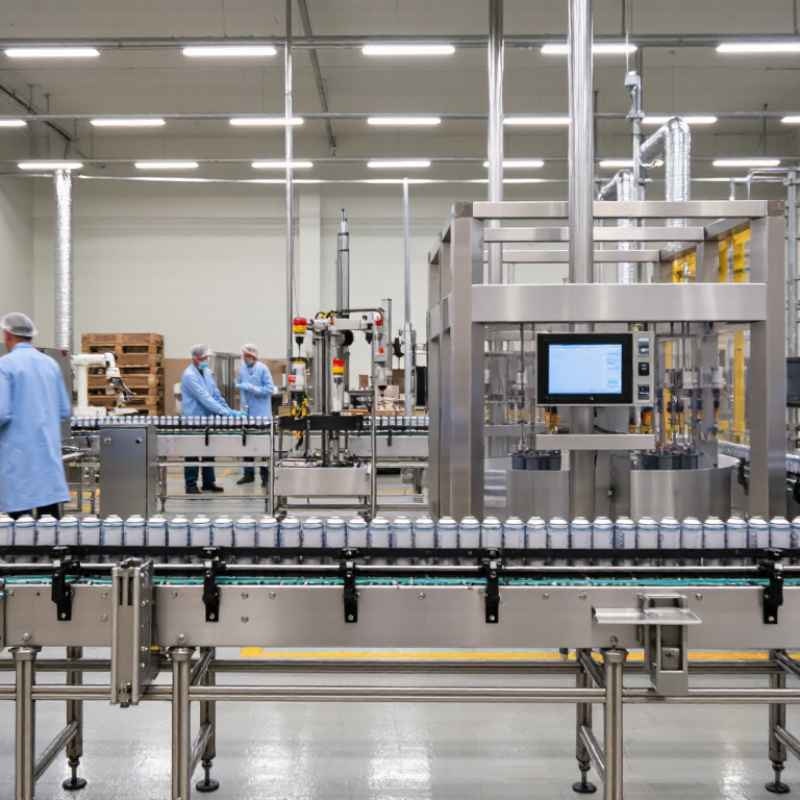
Aerosol production lines combine precise filling, pressure control, and quality inspection. A typical line moves containers through depalletizing, rinsing, product filling, valve placement, crimping, propellant charging, leak testing, coding, and case packing. Each station must remain synchronized. One small timing error can create underfilled cans or damaged valves.

Market evidence supports stronger process control. Fortune Business Insights valued the global aerosol cans market at about USD 11.7 billion in 2023, with continued growth expected through 2032. This growth increases pressure on manufacturers to improve speed without weakening safety. ISO 9001 supports documented quality systems, while ISO 12100 guides machinery risk assessment. EN 14847 also addresses aerosol containers and their mechanical requirements. In practice, operators should verify fill weight, crimp dimensions, internal pressure, spray pattern, and leak rates. Automated sensors help, but human inspection still catches unusual defects. A perfect line is mostly a myth.

Tips: Request factory acceptance tests before installation. Check the filling range, changeover time, and reject-handling logic. Confirm that safety guards, ventilation, grounding, and emergency stops meet local requirements. Review calibration records, not only brochures. The International Organization for Standardization reports that ISO 9001 certification supports consistent operational controls, but certification alone cannot guarantee reliable output. Production teams must audit real samples, maintain clean contact parts, and record deviations honestly. Slightly slower production may prevent expensive recalls.

Criteria for Evaluating the Seven Leading Aerosol Line Manufacturers

Evaluating the seven leading aerosol line manufacturers requires more than comparing machine prices. FEA’s 2023 statistics reported about 5.5 billion aerosol units produced in Europe, showing the scale of this industry. A credible manufacturer should provide stable filling accuracy, reliable crimping, pressure testing, and documented batch traceability. Ask for measured data, not attractive showroom claims.

The strongest suppliers demonstrate complete line integration, from can feeding to valve placement, filling, sealing, coding, and leak detection. Their systems should support safe, compliant production under applicable machinery, electrical, and workplace-safety standards. Review changeover time with different can diameters and formulas. PMMI research repeatedly identifies labor efficiency, automation, and data visibility as major packaging priorities. However, reported speed can hide frequent stops. I would test OEE during a demanding shift, not only during a short demonstration.

Tips: Request three years of service records, spare-parts lead times, operator training details, and documented factory-acceptance results. Check whether sensors identify underfill, faulty valves, and damaged containers before shipment. Smithers industry analyses also emphasize sustainability and lightweight packaging, so assess energy use, compressed-air demand, and material waste. A lower purchase price may become expensive when support is slow. This part is often underestimated.

7 Best Aerosol Production Line Manufacturers? - Criteria for Evaluating the Seven Leading Aerosol Line Manufacturers

Evaluation Criterion Recommended Weight What to Evaluate Objective Evidence to Request Strong Supplier Benchmark
Production Capacity and Speed 20% Rated output, actual line speed, changeover time, and suitability for the required can and valve formats. Factory acceptance-test records, cycle-time data, product-format list, and reference installations. Documented performance under conditions similar to the buyer’s products, including speed at the required fill volume.
Filling Accuracy and Product Quality 20% Accuracy and repeatability of propellant and concentrate filling, crimping quality, leak control, and inspection capability. Factory test results, calibration certificates, statistical process-control records, and sample inspection reports. Consistent fill weights, reliable valve crimping, automated leak detection, and traceable quality records.
Safety and Hazardous-Area Engineering 18% Protection against flammable propellants, ignition sources, overpressure, static electricity, and abnormal operating conditions. Risk assessments, equipment certificates, electrical-area classification, guarding details, and emergency-shutdown documentation. A documented safety design aligned with applicable local regulations and hazardous-area requirements.
Compliance and Documentation 15% Regulatory support, machine documentation, validation packages, material declarations, and regional conformity requirements. User manuals, electrical drawings, pneumatic diagrams, declarations of conformity, validation protocols, and spare-parts lists. Complete, version-controlled documentation supplied in the buyer’s required language and format.
Automation and Line Integration 10% PLC and HMI functionality, recipe management, machine communication, data logging, and compatibility with upstream and downstream equipment. Control-system architecture, communication protocols, sample screens, alarm lists, and integration test plans. A clear control architecture with production data access, recipe security, and reliable line synchronization.
Maintenance, Training, and Service 10% Availability of spare parts, remote support, technician response, preventive-maintenance planning, and operator training. Service-level agreement, spare-parts lead times, training agenda, maintenance schedule, and installed-base references. Defined response times, accessible technical support, clear maintenance procedures, and locally available critical spares.
Total Cost of Ownership 7% Purchase price, installation, commissioning, utilities, consumables, labor requirements, maintenance, and expected downtime. Itemized quotation, utility-consumption estimates, warranty terms, operating-cost model, and lifecycle assumptions. Transparent pricing with a realistic lifecycle-cost calculation rather than relying only on the initial purchase price.
Total Evaluation Score 100% Score each supplier from 1 to 5 for every criterion, multiply by the recommended weight, and compare the weighted totals.

Scoring guide: 1 = insufficient evidence, 2 = below requirements, 3 = acceptable, 4 = strong, 5 = clearly demonstrated performance.

Seven Notable Aerosol Production Line Manufacturers and Their Specialties

Seven notable aerosol production line manufacturers stand out through different technical strengths.

A turnkey line builder designs the full process, from can feeding to palletizing, reducing integration gaps. A high-speed rotary specialist focuses on stable filling, crimping, and valve placement at demanding production rates. A compact-line manufacturer serves smaller facilities with modular equipment and easier floor planning.

Another specialist develops pressure-sensitive filling systems for consistent product dosing. Its strongest feature is precise control when viscosity or temperature changes. A valve-assembly manufacturer concentrates on accurate component placement, reducing misalignment and rejected cans.

A leak-testing equipment maker adds vacuum, pressure, or water-bath inspection stations, helping operators identify weak crimps before shipping. These details matter. Small leaks can become costly quality events.

A sixth manufacturer builds automation platforms with sensors, recipe control, and batch records.

This supports traceability and quicker changeovers, although software training is often underestimated. The seventh specializes in end-of-line packaging, including case packing, labeling, and robotic pallet handling.

A practical factory audit should examine safety guarding, cleaning access, spare-part availability, and operator training.

I would also request trial data using the actual container, valve, and formulation. Catalog speeds can look impressive, but real performance may fall after frequent format changes. No manufacturer is perfect. Even reliable equipment may need better documentation, simpler controls, or stronger local service.

Comparing Automation, Capacity, Flexibility, and Technical Support

Choosing among the 7 best aerosol production line manufacturers requires more than comparing catalog specifications. Automation should match your actual operators, products, and inspection needs. Servo-controlled filling, automatic crimping, vision checks, and digital production records can improve consistency. However, excessive automation may increase maintenance demands. A faster line is not always better.

Capacity must be measured in usable cans per minute, not only advertised speed. Ask for performance data with your container sizes and product types. A reliable manufacturer should explain changeover time, reject rates, and testing procedures. Flexible equipment supports multiple can diameters, valve formats, and filling volumes. That flexibility matters when market demand changes. Still, every added option can raise cost and complexity.

Technical support often separates a workable line from a costly problem. Look for factory acceptance testing, installation guidance, operator training, spare-parts planning, and responsive remote diagnostics. Experienced suppliers should discuss safety controls, quality records, and applicable production standards without making vague promises. I would also request references from facilities with similar output levels. No manufacturer gets every detail right. The important question is how clearly they handle problems, revisions, and unexpected downtime.

7 Best Aerosol Production Line Manufacturers

Benchmark comparison of automation, production capacity, changeover flexibility, and technical support for aerosol manufacturing lines.

Scores use a 100-point scale. Automation reflects controls and integrated inspection, capacity represents typical cans-per-minute capability, flexibility measures format and product changeover performance, and technical support covers commissioning, training, spare parts, and service response.

How to Select the Right Aerosol Production Line Manufacturer

Selecting the right aerosol production line manufacturer requires more than comparing prices. You need evidence of practical experience, engineering skill, and dependable after-sales support.

Review the manufacturer’s previous projects, especially those with similar can sizes, filling volumes, and production speeds. Ask for clear data on filling accuracy, leak testing, crimping quality, and changeover time. A trustworthy supplier should explain how each station works, not hide behind impressive promises. Request factory acceptance testing, installation guidance, operator training, and spare-parts planning. These details often determine whether a line performs smoothly after delivery.

Safety must remain central. Check whether the equipment supports recognized industrial standards, documented risk assessments, proper ventilation, grounding, and suitable protective systems. The manufacturer should also help you understand local requirements before final design approval. Do not accept vague certificates. Verify their scope, date, and relevance to your facility.

Tips: Compare total ownership costs, not only the purchase price. Visit an operating installation if possible. Watch a real production trial. Ask how quickly faults are diagnosed and repaired. A useful question is simple: “What usually fails first?” Honest answers reveal experience. Also, leave room for uncertainty. Production conditions change, and even a well-designed line may need adjustment after installation. A flexible manufacturer will record these lessons and improve the process instead of blaming the operator.