
Selecting the best China Ethernet Humidity Sensor requires more than comparing price and advertised accuracy. Global buyers need dependable measurements, stable networking, documented calibration, and responsive technical support. In a cold-chain warehouse, one incorrect reading can leave cartons sweating near a loading door. In a server room, rising humidity can threaten equipment reliability. Small details matter.
ASHRAE TC 9.9 Thermal Guidelines identify controlled temperature and humidity as important factors in data-center operation. ISO 7726 also emphasizes suitable instruments, placement, and measurement uncertainty for thermal environments. These references show why a sensor should provide more than a percentage reading. Buyers should examine accuracy across the working range, response time, long-term drift, operating temperature, and calibration traceability. A useful Ethernet Humidity Sensor may also support Modbus TCP, PoE, alarm thresholds, web configuration, and secure data access. However, “industrial grade” is not a complete specification.
The WMO State of the Global Climate 2023 reported exceptional climate conditions, reminding facility managers that environmental variation is becoming harder to ignore. This does not automatically make every networked sensor necessary. It does make reliable monitoring more valuable. China offers many capable manufacturers, but quality varies between factories, batches, and firmware versions. Request sample testing, calibration records, EMC documentation, ingress protection details, and communication logs before placing a large order. We should be honest here: no product suits every site. The best choice balances verified performance, integration effort, lifecycle cost, and support after delivery.
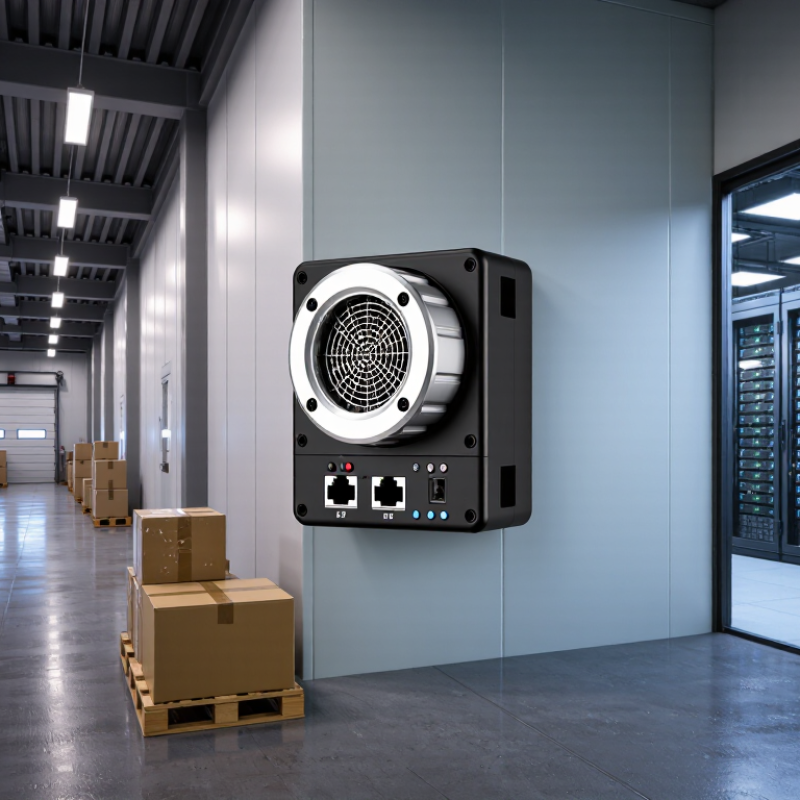
An Ethernet humidity sensor measures relative humidity and sends readings through a wired network. It usually combines a humidity element, temperature compensation, a microcontroller, and an Ethernet interface. Data can travel through Modbus TCP, MQTT, HTTP, or SNMP. Some models also support Power over Ethernet, reducing separate wiring near racks, warehouses, or laboratories.
It is more than a wall-mounted hygrometer. A suitable device records trends, triggers alerts, and supports remote calibration checks. IoT Analytics reported 16.6 billion connected IoT devices worldwide in 2023, a 13% annual increase.
That growth shows why networked environmental monitoring is becoming practical. However, more connections do not guarantee better measurements. Cable noise, condensation, poor probe placement, and delayed calibration can distort results.
ASHRAE TC 9.9 guidance places many data-center environments near 18–27°C, with humidity controlled through relative-humidity and dew-point limits. A sensor should therefore report both values, not humidity alone.
In a server room, I would place probes near air inlets, return-air paths, and known cold spots. One sensor is rarely enough. A neat dashboard can still mislead. Check accuracy, response time, IP protection, calibration intervals, alarm history, and network security before purchase. I would also request test records based on recognized methods, because a low listed tolerance may hide weak performance across temperature changes.
Best China Ethernet Humidity Sensor for Global Buyers?
How Ethernet Humidity Sensors Measure and Transmit Data
An Ethernet humidity sensor measures relative humidity through a capacitive polymer element. As moisture changes, the element’s electrical capacitance changes too. Internal electronics convert that signal into a percentage reading and often record temperature for compensation. The sensor then sends data through an Ethernet cable using protocols such as Modbus TCP or MQTT. This supports live dashboards, alarms, and remote calibration checks. The IEA’s Energy Efficiency 2023 report states that buildings consume about 30% of global energy. Reliable humidity data can help reduce unnecessary ventilation and cooling.
In practical installations, cable length, electrical noise, condensation, and poor placement can distort readings. A sensor beside a cooling coil may report a misleadingly low value. ASHRAE guidance emphasizes correct sensing location and calibration for dependable HVAC control. The World Meteorological Organization also stresses traceability and measurement quality across observing systems. Ethernet adds convenience, but it does not remove measurement uncertainty. Some low-cost devices still offer impressive specifications that field testing cannot fully support. That deserves reflection.
Tips: Keep the sensing probe away from direct airflow and water droplets. Confirm the supported Ethernet protocol before purchase. Compare readings with a calibrated reference instrument during commissioning. Check data delay, alarm behavior, and recovery after network failure. These small tests often reveal more than a product sheet.
| Data Dimension | Typical Technical Data | What Global Buyers Should Check |
|---|---|---|
| Humidity Measurement Principle | Capacitive polymer sensing element | The sensing element detects changes in capacitance caused by water vapor. Capacitive sensors are widely used because they offer low power consumption, repeatable readings, and continuous monitoring. |
| Relative Humidity Range | 0 to 100% RH, non-condensing | The sensor can measure the full practical relative-humidity scale, but prolonged condensation may affect accuracy, response time, or long-term stability. |
| Typical Humidity Accuracy | Approximately ±2 to ±3% RH at 25°C | Accuracy normally depends on temperature, humidity level, calibration method, and the specified measurement range. Buyers should request a test report or calibration certificate. |
| Temperature Measurement | Typically -40°C to +85°C | Temperature data supports humidity compensation and allows the device to calculate additional values such as dew point or absolute humidity. |
| Typical Temperature Accuracy | Approximately ±0.3 to ±0.5°C | Temperature accuracy should be evaluated together with the operating environment and the calibration points used by the manufacturer. |
| Response Time | About 5 to 15 seconds for a 63% response | Response time varies with airflow, protective filters, sensor housing, and environmental changes. A faster response is useful for HVAC, storage, and process monitoring. |
| Measurement Interval | Commonly 1 to 60 seconds; configurable | A shorter interval provides more detailed trend data, while a longer interval reduces network traffic and power consumption. |
| Ethernet Interface | 10/100 Mbps Ethernet, RJ45 | A standard Ethernet interface supports connection to switches, gateways, industrial networks, and building-management infrastructure. |
| Communication Protocols | Modbus TCP; HTTP or MQTT may also be available | Modbus TCP is commonly used in industrial automation. MQTT is useful for cloud and IoT systems, while HTTP can support web-based integration and API access. |
| Data Transmission Method | Digital packets over an IP network | The sensor converts the measured signal into digital values and sends humidity, temperature, timestamp, status, and alarm data to a server, PLC, gateway, or monitoring platform. |
| Dew-Point Calculation | Usually available through firmware or software | Dew point is calculated from relative humidity and temperature. It helps identify condensation risks in cold rooms, data centers, warehouses, and HVAC ducts. |
| Power Supply | Typically 9 to 36 VDC; PoE may be supported | Buyers should confirm input-voltage tolerance, connector type, current consumption, and whether the device supports IEEE 802.3af or another PoE standard. |
| Network Configuration | DHCP and static IP addressing | Static IP is often preferred for industrial installations, while DHCP simplifies deployment on managed corporate or building networks. |
| Alarm Functions | High/low RH and temperature thresholds | Threshold alarms can be sent through relay output, email, SNMP, MQTT, HTTP, or a monitoring platform, depending on the device configuration. |
| Data Logging | Internal memory or external software storage | Data logging helps maintain a historical record for quality control, environmental compliance, equipment protection, and troubleshooting network interruptions. |
| Calibration Capability | One-point or two-point RH calibration | Two-point calibration generally provides better correction across the working range. Calibration intervals should be based on application risk and operating conditions. |
| Ingress Protection | Common enclosure ratings: IP30 to IP65 | IP rating selection depends on installation location. Dusty, humid, or washdown environments require a more suitable enclosure and correctly installed cable glands. |
| Operating Environment | Typically -20°C to +60°C for the electronics | The permissible environmental range of the electronics may differ from the sensing probe range. Buyers should verify storage temperature, condensation limits, and installation altitude. |
| Installation Options | Wall, duct, panel, or remote-probe mounting | Remote probes are useful where the electronics must remain outside a cold room, duct, clean area, or high-temperature zone. |
| Cybersecurity Considerations | Password control, network segmentation, and encrypted protocols where supported | For global deployments, confirm firmware-update procedures, user authentication, access permissions, TLS support, and compatibility with the buyer’s IT security policy. |
| Common Applications | HVAC, warehouses, cold rooms, server rooms, laboratories, and production areas | The best specification depends on the required accuracy, condensation exposure, response time, network architecture, enclosure protection, and compliance requirements. |
Note: The values above are representative technical ranges for Ethernet-connected humidity sensors and are intended for product comparison. Actual specifications vary by sensor design, calibration conditions, enclosure, firmware, and installation environment.
For global buyers, the best China-made Ethernet humidity sensor is not defined by price alone. Compare measurement accuracy, operating range, response time, network protocol, and calibration evidence. ASHRAE guidance commonly places indoor relative humidity near 30–60%, so a sensor should remain stable across that band. For archives, laboratories, and storage rooms, wider ranges may matter more.
Look for ±2% RH accuracy, but inspect the test conditions. Accuracy at 25°C may weaken near condensation or below 10% RH. Check temperature compensation, drift data, and the calibration interval. ISO/IEC 17025 supports confidence in laboratory calibration, yet a certificate without traceable points is not enough. Small detail. It matters.
Ethernet specifications need equal attention. Modbus TCP support can simplify industrial integration, while MQTT may suit cloud monitoring. Confirm static IP settings, DHCP, data refresh rate, and security controls. PoE can reduce cabling, but the power budget must match the installation. IEC 60529 ingress ratings also deserve careful review; IP65 may protect against dust and water jets, not immersion. A 2024 industry market report identified IoT connectivity as a major humidity-sensor growth driver, but connectivity does not guarantee dependable readings. Ask for sample logs, uncertainty statements, and test results at 30%, 50%, and 80% RH. Some specifications still look too perfect. Review them critically.
Global buyers should evaluate the manufacturer, not only the Ethernet humidity sensor. Specifications alone are not enough. Ask how sensors are calibrated, tested, and documented before shipment. Look for clear accuracy ranges, operating temperatures, Ethernet protocols, and enclosure ratings. Request calibration records from recent production batches. Real evidence matters.
A reliable factory should explain its testing process without vague promises. Ask to see humidity chambers, reference instruments, and inspection records during a video audit or site visit. Confirm whether each sensor receives individual calibration. Check firmware stability, network recovery, and data transmission under poor connections.
A sample should run continuously for several days before approval. Small failures often appear late.
Manufacturer experience also includes after-sales support. Confirm response times, replacement procedures, spare parts, and warranty terms in writing. Review export documents and technical manuals for consistency. Low prices can hide weak calibration or limited engineering support.
Even experienced buyers can miss differences between laboratory accuracy and field performance. No checklist is perfect. I would also test sensors in condensation, dust, and changing temperatures, because a clean showroom proves very little. A manufacturer willing to discuss limitations often appears more dependable than one offering flawless claims.
Choosing a China-made Ethernet humidity sensor for global use requires more than comparing accuracy and price. Installation conditions matter. Mount the probe away from steam outlets, direct sunlight, and cold metal surfaces. Leave enough airflow around the sensing area. A crowded control cabinet can create false readings. Use shielded Ethernet cable near motors or variable-frequency drives. Ground the shield correctly, or interference may increase.
Integration should match the buyer’s existing system. Confirm support for Modbus TCP, MQTT, or another required protocol before ordering. Check IP ratings, power requirements, PoE compatibility, and operating temperature. Test data updates at the intended network distance. Some devices report quickly but lose stability during network interruptions. That small weakness deserves attention.
Tips: Request calibration records, firmware details, wiring diagrams, and sample communication data. Ask for traceable test reports, not only a compliance logo. Verify EMC, electrical safety, RoHS, REACH, and radio requirements where applicable. Requirements differ between markets, and a certificate may cover only one product version. Keep serial numbers and inspection photos for each shipment. This improves traceability during audits. A pilot installation is wise. It may reveal condensation, firewall restrictions, or sensor drift before full deployment. Perfect planning is rare, so document every observed limitation honestly.
For Ethernet humidity sensor installations, the selected cable category and Ethernet speed affect the maximum network segment length. The values shown represent commonly referenced structured-cabling limits, including patch connections, and should be confirmed against the installed cabling standard and site conditions.
Reference basis: IEEE 802.3 Ethernet specifications and ISO/IEC 11801 structured cabling guidance. Product-level CE, UKCA, FCC, RoHS, REACH, EMC, and safety documentation must be verified according to the destination market and final sensor configuration.
