

Search
Best Hydro Jetting Machine Manufacturer in China for Buyers
Choosing the best Hydro Jetting Machine manufacturer in China takes more than comparing prices and pressure ratings. Buyers need to understand how the machine will perform on real jobs: clearing stubborn pipe deposits, handling long hose runs, and working reliably through a full shift. A high-pressure pump may look impressive on a specification sheet. Yet poor hose quality, inconsistent assembly, or limited parts support can quickly change the calculation.
Hydro-jetting equipment specialist Liang Wei puts the buying principle this way: “A machine earns trust through steady performance, not its highest pressure rating.” Buyers should check operating pressure and flow rate together, then ask how the manufacturer tests pumps, engines, safety controls, and assembled units. Request clear specifications, warranty terms, spare-parts details, and service guidance. Photos or videos of production can help, but they do not replace consistent documentation. Ask practical questions. How quickly can wear parts ship? Can the supplier explain maintenance intervals? Small gaps matter.
This guide explores what buyers should examine when comparing Chinese manufacturers, from machine configuration to quality checks and after-sales support. It also looks at how to match equipment to pipe diameter, blockage type, and daily workload. No single model fits every crew. That is easy to overlook. A lower purchase price may be attractive, but downtime, operator training, and replacement parts belong in the same decision. Some details still need direct verification with the supplier. A careful comparison can help buyers find a Hydro Jetting Machine that suits the work, not just the brochure.
Understanding Hydro Jetting Machines and Their Applications
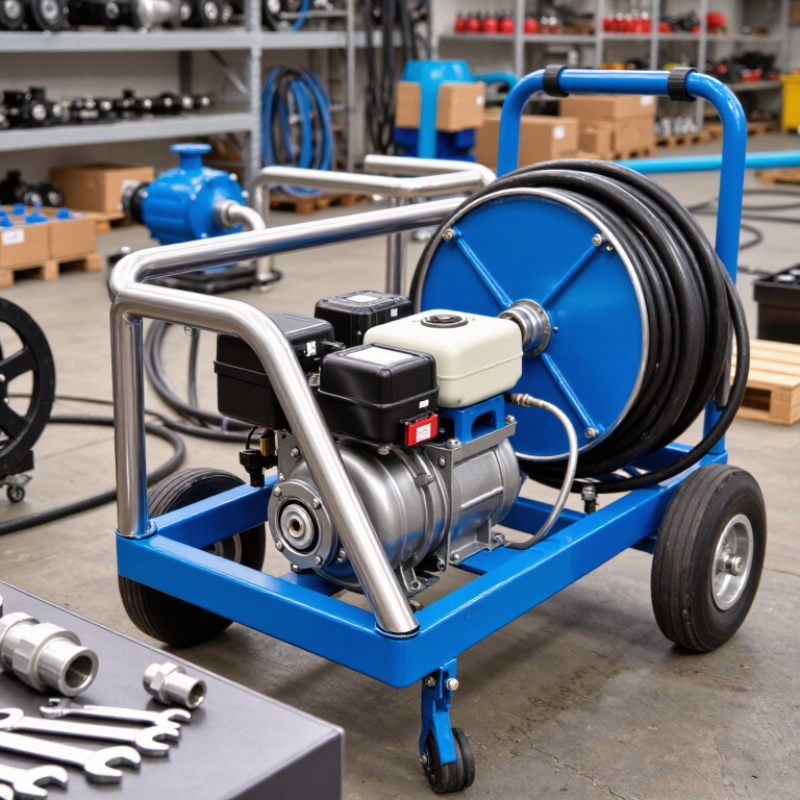
Hydro jetting machines use pressurized water to remove buildup from pipes and clean demanding surfaces. A pump sends water through a reinforced hose and a selected nozzle. In drain work, rear-facing jets help move the hose forward while flushing loosened grease, sediment, and scale back toward an access point. The right setup depends on both pressure and water flow. More pressure is not automatically better.
Applications range from residential drain maintenance to municipal sewer cleaning and industrial equipment washdown. For example, operators may use a compact unit on a narrow service line, then choose a higher-flow machine for a larger sewer. Nozzle shape matters, too. A rotating nozzle can help with stubborn deposits, while a simple flushing nozzle may suit routine cleaning. Small details change results.
Good judgment is essential. Before work begins, an experienced operator checks hose condition, fittings, pipe access, and the likely cause of the blockage. That matters. Jetting can clear debris, but it cannot repair a collapsed pipe, and excessive force may damage a weak or deteriorated line. I would not treat every recurring clog as a cleaning problem. Buyers should compare working pressure, flow rate, hose length, water supply needs, and service support, then match those specifications to their actual jobs.
Best Hydro Jetting Machine Manufacturer in China for Buyers - Understanding Hydro Jetting Machines and Their Applications
| Machine Category | Typical Operating Range | Common Applications | Key Selection Considerations | Useful Features |
|---|---|---|---|---|
| Portable drain jetter | Often around 1,000–3,000 psi and 1–5 gpm; specifications vary by model. | Residential drains, small-diameter pipes, and routine maintenance in kitchens, bathrooms, and floor drains. | Check the pipe diameter, hose length, water supply, portability, and the machine’s rated pressure and flow. | Compact frame, hose reel, pressure control, and compatible nozzles for flushing and light blockage removal. |
| Professional mobile jetter | Commonly available in configurations of approximately 2,000–4,000 psi and 3–10 gpm. | Drain-service work in homes, commercial buildings, and smaller municipal lines. | Choose pressure and flow to suit the pipe and blockage; consider transport, setup time, and expected daily use. | Transport wheels or a vehicle-mounting option, hose storage, pressure regulation, and accessible service points. |
| Trailer-mounted sewer jetter | Configurations often range from about 2,000–4,000 psi and 10–25 gpm, with model-specific variations. | Longer sewer runs, larger drain lines, municipal maintenance, and work requiring higher water flow. | Assess tank capacity, refill access, hose length, vehicle towing limits, and the pipe sizes serviced. | Water tank, hose reel, stable trailer chassis, engine protection, and controls accessible to the operator. |
| High-flow sewer cleaning unit | Some heavy-duty units deliver roughly 10–60 gpm; operating pressure depends on the pump and system design. | Large-diameter sewers, sediment removal, and applications where moving debris with water volume is important. | Confirm that the pump, hose, nozzle, and pipe conditions are compatible; higher flow can require a substantial water supply. | High-capacity water storage or refill arrangements, heavy-duty hose handling, and adjustable operating controls. |
| Industrial water-jetting system | Pressure and flow are engineered for the task; specialized water-blasting systems may operate at pressures far above ordinary drain jetters. | Industrial cleaning tasks such as surface preparation or equipment cleaning, where the process and materials allow water jetting. | Specify the application, target material, required cleaning result, duty cycle, and applicable safety requirements before selecting a system. | Application-specific pump and nozzle configuration, guarded controls, emergency stop, and documented operating limits. |
| Pipe size and nozzle match | There is no single suitable pressure or flow for every pipe; operating limits depend on equipment and pipe condition. | All drain and sewer jetting work, including flushing, grease removal, and selected blockage-clearing tasks. | Match nozzle type and jet direction to the task. Inspect pipe material and condition, and avoid exceeding the equipment or pipe limits. | Interchangeable nozzles, clear pressure gauges, hose inspection access, and a documented maintenance schedule. |
Note: Pressure and flow figures are general examples, not universal specifications. Actual performance varies by machine design, pump, nozzle, hose, and operating conditions. Follow the manufacturer’s operating instructions, use appropriate personal protective equipment, and assess the pipe before jetting.