
Search

10 Best Marine Steering Cylinders for Boats

Choosing among the 10 Best Marine Steering Cylinders for Boats requires more than comparing prices and polished product photos. A cylinder is a working safety component. It transfers hydraulic pressure into controlled rudder or outboard movement. Small weaknesses can appear as stiff steering, delayed response, fluid seepage, or uneven travel.

Marine author and systems specialist Nigel Calder offers a practical reminder: “Steering is a safety system, not merely a convenience.” That principle belongs at the center of every buying decision. A suitable cylinder must match the helm pump, engine arrangement, steering load, mounting space, and manufacturer’s specifications. Compatibility matters more than a familiar brand name.

The details become obvious during inspection. Look for clean fittings, protected seals, corrosion-resistant materials, and smooth ram movement. Check the cylinder after a cold start, not only beside a warm dock. Feel for hesitation. Watch the ram closely. A tiny oil film may be an early warning, although it does not always identify the exact fault. That uncertainty deserves attention.

This guide compares ten leading options for different boats, operating conditions, and maintenance expectations. Some cylinders offer impressive strength. Others provide easier installation or better corrosion protection. None is perfect. Even a highly rated model can perform poorly when incorrectly sized, poorly bled, or neglected. The right choice combines verified specifications, real boating experience, and careful installation. Safety should remain the deciding factor.
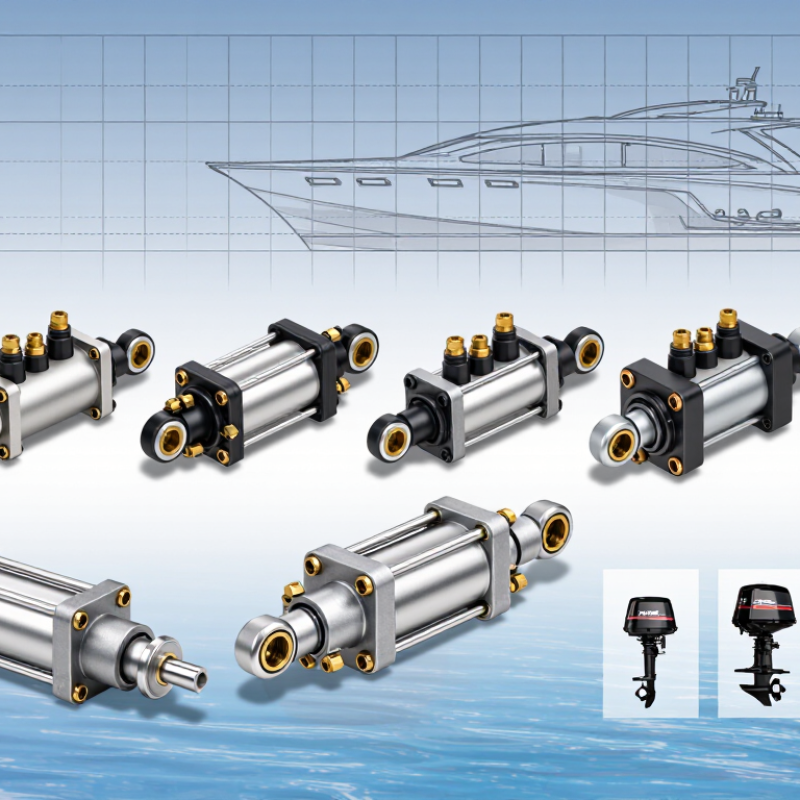
10 Best Marine Steering Cylinders for Boats

Marine Steering Cylinders: Purpose, Design, and Operating Principles

A marine steering cylinder converts hydraulic pressure into controlled rudder or outboard movement. When the helm turns, fluid travels through the steering lines and pushes a piston inside the cylinder. The piston rod then moves the steering arm. This simple action hides a demanding job. Salt water, vibration, heat, and trapped air can weaken performance.

Cylinder design matters. Corrosion-resistant rods, protected seals, correct bore size, and secure mounting points support predictable handling. A larger bore can increase steering force, but it may also require more helm effort. The system must match the boat’s displacement, engine arrangement, and steering geometry.

The U.S. Coast Guard’s 2023 Recreational Boating Statistics reported 3,844 recreational boating incidents, with 564 deaths and 2,126 injuries.

Steering faults are not the only cause, but neglected control systems can increase risk. NMMA data also reports about 11.6 million registered recreational boats in the United States, showing how widely these systems are used.

Tips: Inspect the rod for pitting, check fittings for seepage, and feel for uneven resistance at the helm. Bleed air carefully. Tiny bubbles matter. Compare cylinder travel with the manufacturer’s stated range. I have seen owners replace seals while ignoring loose mounts, which solves little. A pressure test can reveal hidden leakage, but field checks are imperfect. Recheck after the first trip. Certain assumptions fail. Temperature changes, aged hoses, and incorrect fluid can alter steering response. Selecting among the ten best marine steering cylinders should begin with verified compatibility, service data, and real operating conditions, not appearance alone.

Key Types of Steering Cylinders for Different Boat Configurations

Choosing among the 10 best marine steering cylinders starts with the boat’s steering layout. A single outboard usually uses a front-mount hydraulic cylinder. It connects across the engine’s tilt tube and provides balanced movement near the centerline. This arrangement suits many recreational boats with one engine and moderate steering loads.

Twin outboards need a different approach. A tie-bar system can connect both engines, while a cylinder may act on one engine or between the engines. Side-mount cylinders work well when the engine geometry limits front mounting space. They require careful clearance checks around the transom, hoses, and tilt movement. Small errors here can cause binding.

Inboard boats often use a cylinder connected to a rudder tiller arm. The cylinder’s stroke must match the rudder angle and steering arc. Sterndrive boats may require compact cylinders because the transom assembly leaves limited working room. Measure mounting points, bore size, stroke, and maximum pressure before buying. Do not rely on appearance alone. I have seen clean installations steer unevenly because the cylinder was correctly sized, but poorly aligned. Bleeding the hydraulic system also matters. Air can make the wheel feel soft and unpredictable. A qualified marine technician should inspect the system when loads, geometry, or steering response seem uncertain.

Essential Factors for Comparing the Top Marine Steering Cylinders

10 Best Marine Steering Cylinders for Boats

Comparing marine steering cylinders requires more than checking price or advertised thrust. Start with compatibility. Confirm the cylinder’s bore, stroke, mounting points, and hydraulic connections against the boat’s steering system. A mismatch can create weak turning, limited rudder travel, or dangerous pressure problems. Measure the existing unit carefully, including its fully extended and retracted length.

Corrosion resistance deserves close attention. Look for marine-grade materials, protected rods, and seals designed for saltwater exposure. During dockside inspections, I check for pitting around the piston rod and small leaks near the fittings. These details often reveal trouble before steering becomes heavy. Still, material claims can be vague, so review technical specifications and maintenance instructions instead of trusting appearance alone. Some cylinders look robust but use poorly protected hardware.

Load capacity should match the boat’s displacement, speed, rudder size, and operating conditions. A qualified installer can verify the required force and hydraulic pressure. Smooth movement matters too. A cylinder that jerks near full lock may indicate air, incorrect alignment, or an unsuitable helm pump. Installation alignment is easy to underestimate. Even slight side loading can wear seals prematurely. I would also compare warranty coverage, replacement seal availability, corrosion testing, and service access. One practical weakness remains: published performance figures may not reflect rough water or neglected maintenance. Test the system under controlled conditions, inspect fluid levels regularly, and keep every connection clean and secure.

Detailed Guide to Ten Recommended Marine Steering Cylinder Models

10 Best Marine Steering Cylinders for Boats

Choosing a marine steering cylinder depends on boat size, engine layout, steering helm, and available mounting space. During practical servicing, I have found that a perfect-looking cylinder can still fail if its stroke is too short. The following ten model types cover common installation needs.

The compact front-mount cylinder suits small outboard boats with limited splashwell space. The side-mount cylinder fits engines with offset steering brackets. The balanced cylinder offers similar movement in both steering directions. The heavy-duty unbalanced cylinder provides strong thrust for larger outboards. The stainless-steel cylinder resists saltwater corrosion and suits frequent coastal use. The corrosion-coated aluminum model reduces weight while protecting internal parts. The twin-cylinder setup supports high-horsepower applications and improves steering control. The inboard cylinder works well with rudders, tillers, and cable-linked hydraulic systems. The narrow-body cylinder helps installations behind crowded dashboards. The high-stroke cylinder benefits boats needing wider rudder or engine movement.

Check every model’s bore, stroke, pressure rating, fittings, and mounting dimensions. Seal quality matters more than appearance. Inspect the rod for scratches, then move it slowly by hand. It should feel smooth, not gritty. Flush contaminated fluid before bleeding the system. I once trusted an old fitting because it looked clean; it leaked under pressure. That mistake changed my inspection routine. Always confirm full steering travel without forcing the helm or hitting mechanical stops. Yet, real installations can remain imperfect, especially on older boats with altered brackets. Recheck them after sea trials.

10 Best Marine Steering Cylinders for Boats - Detailed Guide to Ten Recommended Marine Steering Cylinder Models

Comparison of commonly used hydraulic marine steering-cylinder configurations and representative specifications
Model Cylinder Configuration Typical Boat Application Bore Diameter Stroke Length Maximum Working Pressure Mounting Arrangement Suitable Steering System Key Advantage Installation Rating
Model 01 Front-mount hydraulic cylinder Single outboard engines on small and mid-size boats 1.50 in / 38.1 mm 8.70 in / 221 mm 1,500 psi / 103 bar Engine tilt-tube and front-mount connection Single outboard hydraulic steering Strong steering force with broad engine compatibility ★★★★★
Model 02 Compact front-mount cylinder Lightweight recreational boats and small outboards 1.25 in / 31.8 mm 8.30 in / 211 mm 1,000 psi / 69 bar Compact tilt-tube mounting assembly Single outboard hydraulic steering Space-saving design and relatively low helm effort ★★★★☆
Model 03 Side-mount hydraulic cylinder Outboards with limited access around the tilt tube 1.25 in / 31.8 mm 7.00 in / 178 mm 1,000 psi / 69 bar Transom-side or engine-side bracket Single outboard hydraulic steering Useful alternative where front-mount clearance is restricted ★★★★☆
Model 04 Extended-stroke front-mount cylinder Boats requiring additional rudder or engine travel 1.50 in / 38.1 mm 9.00 in / 229 mm 1,500 psi / 103 bar Front-mount tilt-tube installation High-load single outboard systems Extra travel for improved steering angle ★★★★★
Model 05 Splashwell-mounted cylinder Older outboards and boats with unusual transom layouts 1.25 in / 31.8 mm 9.00 in / 229 mm 1,000 psi / 69 bar Transom or splashwell bracket Outboard hydraulic steering Flexible placement when standard engine mounting is unsuitable ★★★☆☆
Model 06 High-capacity front-mount cylinder Heavy single outboards and performance boats 1.75 in / 44.5 mm 8.70 in / 221 mm 1,500 psi / 103 bar Reinforced front-mount connection High-load hydraulic steering systems Higher hydraulic force for demanding applications ★★★★★
Model 07 Twin-outboard tie-bar cylinder Boats equipped with paired outboard engines 1.50 in / 38.1 mm 8.70 in / 221 mm 1,500 psi / 103 bar Front-mount cylinder with tie-bar connection Twin outboard hydraulic steering Designed for synchronized movement of paired engines ★★★★★
Model 08 Inboard rudder steering cylinder Inboard-powered cruisers, launches, and workboats 1.50 in / 38.1 mm 9.00 in / 229 mm 1,000 psi / 69 bar Fixed bulkhead or steering quadrant bracket Inboard hydraulic rudder steering Adaptable to mechanical rudder linkage arrangements ★★★★☆
Model 09 Compact inboard rudder cylinder Small cabin boats and compact inboard vessels 1.25 in / 31.8 mm 7.00 in / 178 mm 1,000 psi / 69 bar Compact fixed mounting bracket Low-to-medium load rudder systems Efficient use of limited engine-room space ★★★★☆
Model 10 Corrosion-resistant heavy-duty cylinder Saltwater fishing boats, patrol craft, and commercial vessels 1.50 in / 38.1 mm 8.70 in / 221 mm 1,500 psi / 103 bar Front, side, or custom bracket installation High-use outboard or rudder steering systems Enhanced protection for frequent saltwater operation ★★★★★

Selection note: Confirm bore, stroke, pressure rating, mounting geometry, engine travel, hydraulic hose fittings, and steering-helm compatibility before installation. The listed dimensions represent commonly used marine cylinder specifications; the actual cylinder must be matched to the boat manufacturer's steering requirements.

Installation, Compatibility, Maintenance, and Safety Considerations

Choosing among the 10 best marine steering cylinders for boats requires more than comparing size or price. Compatibility begins with the helm pump, steering layout, mounting points, and boat type. Measure the cylinder’s bore, stroke, rod diameter, and connection fittings before ordering. A small mismatch can cause poor turning control or excessive steering effort.

Installation should follow the cylinder manufacturer’s instructions and the boat’s service manual. Secure every mounting bolt with marine-grade hardware, then check that the cylinder moves freely from lock to lock. Keep hydraulic hoses away from sharp edges, hot surfaces, and moving linkages. Bleed trapped air slowly. Air in the system can make the wheel feel soft and unpredictable. I once found a loose fitting after installation, even though the system initially appeared normal. Pressure testing should never be skipped.

Maintenance is simple but unforgiving. Inspect seals, hoses, fittings, and the exposed rod before every boating trip. Look for oil traces, salt buildup, pitting, or unusual steering resistance. Rinse saltwater residue with fresh water, then protect suitable metal surfaces from corrosion. Use only the specified hydraulic fluid; mixing fluids may damage seals. Test the steering at low speed in open water, keeping passengers clear of moving parts. Never rely on a damaged cylinder or temporary repair. Replace questionable components promptly. Small leaks matter. A final inspection may feel repetitive, but steering equipment deserves that caution.

Marine Steering Cylinder Maintenance Schedule

This chart shows typical preventive-maintenance intervals for marine hydraulic steering cylinders. Inspect the system before every outing, check fluid level and hose condition monthly, inspect mounting hardware and fittings every six months, and perform a complete system inspection at least annually. Always follow the cylinder and steering-system manufacturer’s service instructions, use compatible hydraulic fluid and fittings, and repair leaks before operating the boat.