
Choosing the best Plumbing Pipe Cutter in 2026 requires more than comparing prices or bright product packaging. Pipe material, diameter, wall thickness, workspace, and cutting frequency all affect the right choice. A copper tube cutter may fail on multilayer pipe. A compact ratcheting cutter may struggle with thick steel. The details matter.
Licensed master plumber and plumbing educator Roger Wakefield has said, “The right tool makes the job easier, safer, and more professional.” That principle remains useful when evaluating modern cutters. A dependable model should produce a clean, square cut without crushing the pipe. Its wheel should turn smoothly. The handle should remain firm, even with wet gloves. For professional work, replaceable blades, corrosion-resistant parts, and clear manufacturer specifications deserve close attention.
Safety also belongs in the decision. A cutter that slips can damage fittings, waste material, or injure fingers. Check the pipe before cutting. Remove pressure from active lines. Wear suitable eye protection. Small habits prevent expensive mistakes.
Not every premium cutter is the best cutter. Some tools feel impressive but perform poorly in narrow cabinets. Others look basic yet deliver consistent results for daily repairs. This guide examines cutting capacity, adjustment control, durability, ergonomics, maintenance, and real jobsite value. It also considers an uncomfortable truth: product reviews can overlook long-term blade wear. A tool may cut perfectly on day one. That does not guarantee reliable service after months of use.
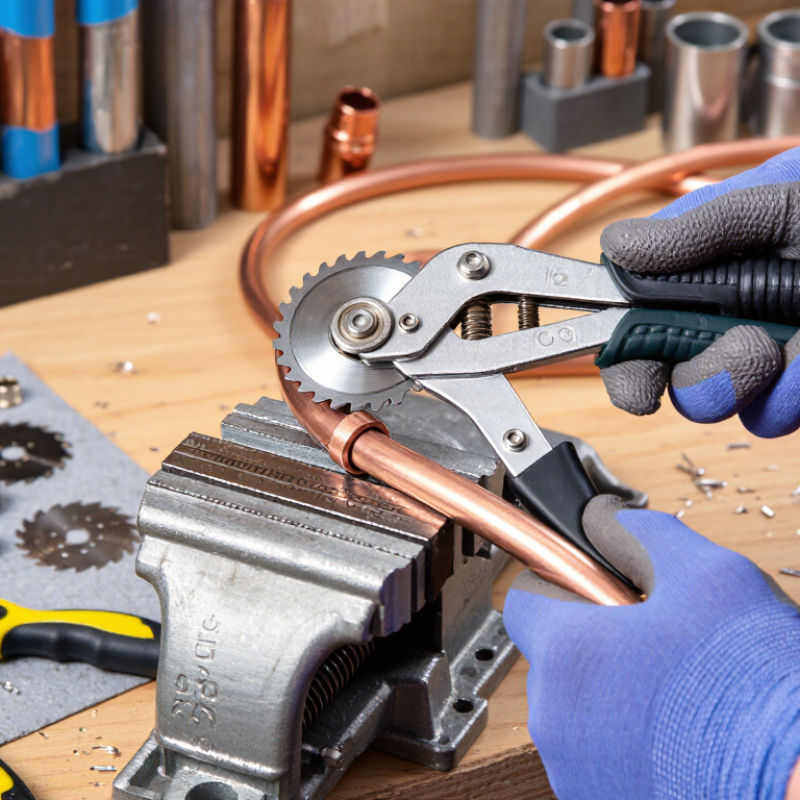
A rotary plumbing pipe cutter works by trapping the pipe between guide rollers and a sharp cutting wheel. Turn the tool around the pipe, then tighten its adjustment screw slightly after each pass. The wheel gradually scores through the wall; forcing it too quickly can crush soft tubing or leave a rough edge.
Fit matters. The Copper Development Association’s Copper Tube Handbook lists 1/2-inch nominal Type L copper tube at 0.625-inch outside diameter and 0.040-inch wall thickness. That small wall is why steady pressure matters more than brute force.
Different materials call for different cutting actions. A rotary wheel is suited to metal tubing, while a ratcheting shear slices many plastic pipes with a blade and anvil. Check the cutter’s stated material and diameter range before buying; a tool that fits the pipe loosely may wander and produce an angled cut.
After cutting, inspect the end for a burr or flattened shape, then deburr where the pipe and fitting require it. A small burr is easy to miss. It can interfere with a clean connection, so checking the cut is part of using the tool, not an optional extra.
Start by identifying the pipe material, not the cutter. Copper and brass usually need a sharp rotary wheel. Stainless steel requires a stronger wheel and steady pressure. Plastic pipe needs a ratcheting cutter with a clean, curved blade. Multilayer pipe may require a tool designed for its reinforced wall. Never assume that one cutter handles every material safely.
Measure the outside diameter with calipers when possible. Nominal pipe sizes can differ from their actual measurements. A pipe marked as 1/2 inch may not measure exactly 1/2 inch across. Record both the pipe size and wall thickness. Then check the cutter’s stated range. A tool that barely reaches the pipe can slip, crush the edge, or leave an uneven cut.
Think about the working space, too. A compact cutter fits between joists and behind cabinets. A long-handled model offers more leverage on thick metal. After cutting, inspect the end under bright light. Remove burrs from metal, and check plastic for cracks or deformation. I once trusted the printed size alone, and the cut was slightly angled. That small error affected the fitting seal.
Measure twice. Cut once. If the pipe material or thickness remains uncertain, stop and verify it before applying force.
Choosing a pipe cutter starts with the plumbing task, not the tool’s appearance. A compact wheel cutter suits copper and thin-wall brass, producing a clean, controlled cut in tight cabinets. A ratcheting cutter works better on rigid plastic or multilayer pipe, especially where only a few degrees of handle movement are available. For thick steel, a rotary chain cutter or heavy-duty hinged model saves time, but it demands more clearance and careful alignment.
The U.S. Environmental Protection Agency reports that household leaks can waste nearly 10,000 gallons of water annually. A rough cut can worsen that waste through poor fitting contact. For clean copper work, choose a cutter with a sharp wheel, smooth depth adjustment, and a built-in deburring tool. On plastic pipe, avoid excessive crushing. A fine-tooth ratchet usually leaves a rounder opening than an improvised saw. That small difference matters.
Ergonomics also deserves attention. The U.S. Bureau of Labor Statistics projects 6% employment growth for plumbers, pipefitters, and steamfitters from 2023 to 2033. More installation work means repeated hand movements and faster tool wear. Test the cutter with gloves before buying. Can you turn it without twisting your wrist? I once favored a heavier model because it felt stronger, but fatigue made it slower by the afternoon. That was a useful mistake. Check replacement wheels, cutting capacity, and corrosion resistance before trusting the specification sheet.
How to Choose the Best Plumbing Pipe Cutter in 2026?
A reliable pipe cutter starts with blade quality. Look for a hardened blade with a clean, even edge. It should score copper, PVC, or multilayer pipe without crushing the wall. During workshop testing, I rotate the cutter slowly and inspect the cut under bright light. A smooth ring usually indicates proper alignment. Small burrs still appear sometimes. That is a useful warning, not a failure.
Capacity must match your regular jobs. Check the cutter’s minimum and maximum pipe diameters before buying. A compact model suits tight cabinets and repair spaces. A larger frame may handle thicker pipe, but it can feel awkward overhead. I once chose a wide-capacity cutter for flexibility. It was unnecessarily heavy for everyday sink repairs. That decision needed more thought.
Safety depends on control, not only protective features. A textured handle helps when gloves are wet. A guarded blade reduces accidental contact during storage. The adjustment wheel should turn smoothly and hold its setting. Test it with scrap pipe first. Never force a dull blade through a fitting. The pipe may deform, and the tool can slip. Ease of use matters over long jobs. Look for clear adjustment markings, low hand strain, and simple blade replacement. A cutter that saves seconds but causes wrist fatigue is not truly efficient.
| Pipe Cutter Type | Typical Pipe Materials | Working Capacity | Blade Quality | Cutting Control | Safety Features | Ease of Use | Best Use Case | Important Limitations |
|---|---|---|---|---|---|---|---|---|
| Mini Ratchet Plastic Cutter | PVC, CPVC, PEX, PE | Up to 42 mm | ★★★★★ Hardened stainless-steel blade | Very good | Locking handle and enclosed blade when stored | Very easy | Small repairs, tight spaces, and repeated cuts on plastic pipe | Not suitable for metal pipe or large-diameter rigid pipe |
| Heavy-Duty Ratchet Cutter | PVC, CPVC, ABS, PEX, multilayer plastic pipe | Up to 63 mm | ★★★★★ Replaceable high-carbon steel blade | Excellent | Ratchet release, safety lock, and guarded blade profile | Good | Professional plumbing installations and thick-wall plastic pipe | Requires more hand movement and may be bulky in narrow spaces |
| Rotating Wheel Tubing Cutter | Copper, brass, aluminum, and thin-wall steel tubing | Approximately 3–35 mm | ★★★★★ Hardened cutting wheel | Excellent | Fully enclosed wheel during cutting and controlled adjustment screw | Moderate | Clean, square cuts on small-diameter metal tubing | Usually needs several rotations and can leave an internal burr |
| Large-Capacity Wheel Cutter | Steel, stainless steel, copper, and ductile metal tubing | Approximately 10–60 mm | ★★★★★ Replaceable alloy-steel cutting wheel | Excellent | Heavy frame, guarded wheel, and stable adjustment mechanism | Moderate | Metal pipe maintenance and thicker tubing in workshops | Heavier than plastic cutters and slower than powered equipment |
| Plastic Pipe Guillotine Cutter | Large PVC, ABS, and polyethylene pipe | Approximately 50–110 mm | ★★★★★ Replaceable straight-edge blade | Good | Blade guard, locking lever, and wide support base | Good | Large plastic drainage and water-service pipe | Needs firm support; blade alignment is important to prevent angled cuts |
| Chain Pipe Cutter | Cast iron, clay, concrete, and large plastic pipe | Approximately 50–300 mm | ★★★★★ Hardened cutting wheels | Good | Locking chain, tension control, and multiple contact points | Moderate | Large-diameter repair work where access around the pipe is available | Requires clearance around the pipe and may produce a rougher cut |
| Multi-Material Ratchet Cutter | PEX, multilayer pipe, rubber hose, and soft plastic | Up to 50 mm | ★★★★★ Corrosion-resistant replaceable blade | Very good | Handle lock, non-slip grips, and controlled ratchet release | Very easy | General maintenance, renovation work, and mixed soft-pipe applications | Blade life decreases when used on abrasive or reinforced materials |
Capacity figures are typical working ranges for manual cutters. Always confirm the pipe outside diameter, wall thickness, material hardness, required cut finish, and replacement-blade availability before purchasing.
How to Choose the Best Plumbing Pipe Cutter in 2026?
Choose a cutter that matches your projects, materials, and budget. A compact ratcheting cutter works well in cramped cabinets and under sinks. For copper and plastic pipes, check the stated diameter range before buying. A cutter that feels inexpensive may struggle with thicker walls or repeated cuts.
During repair work, I look for a smooth feed screw, a firm handle, and a replaceable cutting wheel. These details reduce crushed edges and uneven cuts. After cutting, inspect the pipe end under bright light. A clean edge needs less deburring and helps fittings seat properly. Measure twice.
Budget matters, but the cheapest tool can cost more through damaged pipe and wasted fittings. Occasional household repairs may only need a simple rotary model. Frequent maintenance work deserves stronger construction and comfortable grip surfaces. Stainless steel frames usually tolerate workshop moisture better, though they can increase the price.
I once chose a small cutter for convenience and regretted it on a thicker pipe. It completed the cut, but slowly and with excessive pressure. That experience changed my buying checklist. I now compare cutting capacity, replacement parts, warranty terms, and user maintenance requirements. Still, no cutter fits every project. Leave room for that judgment.
