
Search

What Is an Indoor Trampoline and How to Choose One?

Indoor Trampoline products have moved beyond children’s playrooms and into homes, gyms, and commercial activity centers. Grand View Research valued the global trampoline park market at approximately USD 1.4 billion in 2023. Its report also projects strong growth through 2030. That growth reflects demand for active entertainment, but it does not make every trampoline a wise purchase.

Safety deserves more attention than colorful padding. The American Academy of Pediatrics reported nearly 100,000 trampoline-related injuries in the United States during 2009. Many involved fractures, head injuries, or emergency treatment. Dr. Gary Smith, director of the Center for Injury Research and Policy at Nationwide Children’s Hospital, has offered a blunt warning: “Trampolines are not safe.” His statement should guide careful decisions, not end the conversation.

This guide explains what an Indoor Trampoline is and how to choose one responsibly. It examines frame strength, mat quality, enclosure design, weight limits, ceiling clearance, and replacement-part access. Commercial buyers should also ask whether equipment follows relevant standards, including ASTM F2970 for trampoline courts. Home buyers need clear assembly instructions, stable feet, and realistic space measurements. A soft surface does not remove every risk. A larger model is not automatically better. In practice, the best choice depends on the user’s age, available room, supervision, and intended activity. Product labels can look reassuring. They can also hide important limitations. Therefore, compare specifications carefully, inspect construction closely, and accept that no checklist can guarantee injury-free use.
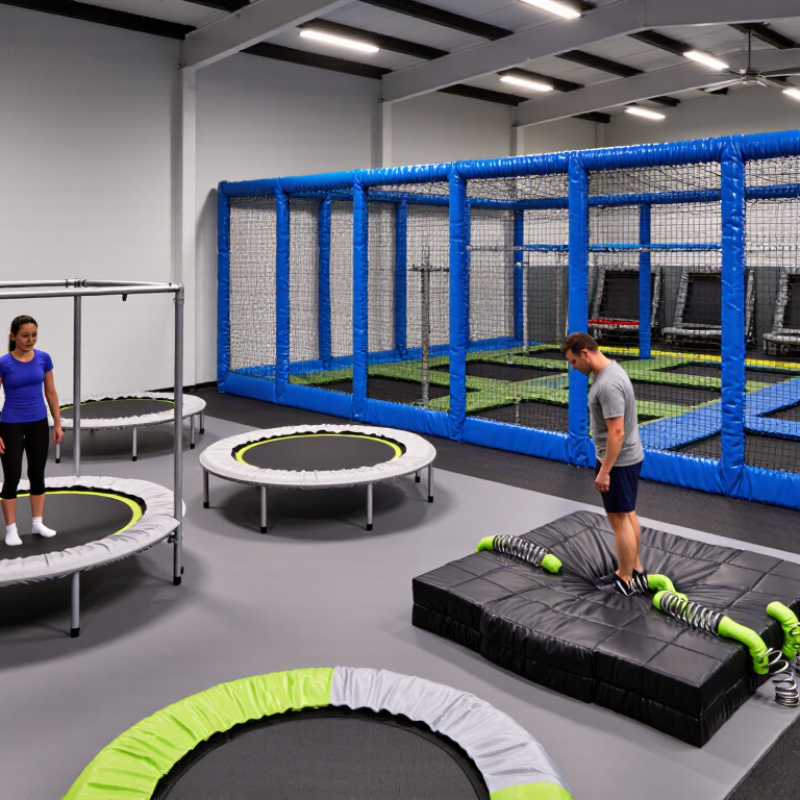
What Is an Indoor Trampoline and How to Choose One?

What Is an Indoor Trampoline?

An indoor trampoline is a rebound exercise system designed for use inside a home, studio, or recreation room. It usually has a flexible jumping mat, metal springs or elastic bands, a supporting frame, and protective padding. Some models also include a safety enclosure, which helps reduce falls during active bouncing.

Unlike a large outdoor trampoline, an indoor model is often smaller and easier to control. However, it still needs enough ceiling height and clear space around the frame. A low ceiling can turn an enjoyable jump into a painful impact. The floor should be level, dry, and strong enough to support the equipment and its users.

In practice, choosing one requires more than checking its diameter. Look at the mat’s stitching, frame stability, padding thickness, weight limit, and enclosure design. A handlebar may help beginners maintain balance, but it should not replace supervision. I once assumed a compact trampoline was automatically safer; that idea was too simple. A smaller frame can still move if its feet lack grip. Check the product instructions, user age guidance, and available room before buying. Leave space above the jumper, especially when children use it. Safety is easy to overlook.

How Indoor Trampolines Work and What They Include

An indoor trampoline uses a flexible jumping mat, steel frame, springs or elastic bands, and protective padding. The mat stores energy when compressed, then returns it upward. Enclosures help limit falls, while anchor points reduce movement on hard floors. Ventilation also matters in indoor play areas, especially during busy sessions.

The U.S. Consumer Product Safety Commission reported about 800,000 trampoline-related emergency-department injuries from 2009 to 2018. This figure covers many settings, not only indoor facilities. ASTM safety guidance also emphasizes frame strength, padding, structural stability, and clear warnings.

A larger mat is not automatically safer. Bounce height, user weight, maintenance, and supervision also affect risk. The design still leaves room for human error.

Tips: Check the frame for movement, exposed springs, or torn padding. Ask for inspection records and the facility’s user limit. Choose a model with thick, securely attached padding and a tight enclosure.

Elastic systems may feel quieter, but spring systems can offer a different bounce response. Neither choice removes the need for supervision. I once assumed spring count was the main quality measure; that view was too narrow. The whole system matters, including floor clearance and daily maintenance.

Which Indoor Trampoline Size and Type Fits Your Space?

An indoor trampoline is a compact jumping surface designed for controlled exercise or play inside a home.

Choosing one begins with measuring the actual space, not guessing from product photos. Leave at least 60 centimeters of clear space around the frame.

Check the ceiling height too. A child reaching upward can need more room than expected. Low ceilings may make jumping uncomfortable and unsafe.

Size and shape should match the room’s purpose. A small round trampoline suits a bedroom corner or home gym. It usually guides the jumper toward the center. A rectangular model can use a narrow room more efficiently, but it may create stronger forward movement.

Measure doors, stairways, and turning areas before buying. The trampoline must pass through them. This detail is easy to overlook.

Type matters as much as size. A handlebar can help beginners with balance, though it may encourage leaning during jumps.

An enclosed model may offer extra protection for children, but it still needs adult supervision. Look for stable legs, covered springs, secure padding, and a weight limit that leaves a sensible margin.

Indoor flooring can also affect stability; smooth tiles may require a non-slip mat.

My own first measurement would be the ceiling, yet I would recheck it after assembly. Frames can sit higher than expected.

A smaller trampoline that fits safely is often more useful than a larger one that crowds the room.

What Safety Features Should You Look For?

What Is an Indoor Trampoline and How to Choose One?

An indoor trampoline is a compact jumping surface designed for home use. It usually has a padded frame, elastic bands or springs, and supportive legs. Safety should guide your choice more than color or size. Look for thick padding that covers the frame completely. Exposed metal can cause painful contact during a missed landing. A firm enclosure net is also valuable, especially for younger users. It should attach securely around the jumping area without wide gaps.

Check the trampoline’s recommended user weight and age range. These details are not decorative. They affect stability and material stress. Wide, non-slip feet can prevent movement on smooth floors. A low-clearance design may suit rooms with limited ceiling height. Leave open space around the trampoline, including above it. In practice, many buyers measure the floor but forget the ceiling. That mistake can make safe jumping uncomfortable.

Tips: Inspect stitching, padding, and leg joints before every session. Stop using the trampoline if parts feel loose or torn. Allow one jumper at a time. Remove nearby furniture, toys, and sharp objects. Keep the floor dry. Adult supervision remains useful, even with strong safety features. Read the care instructions carefully, because elastic parts can weaken over time. Independent safety testing is worth considering, but testing alone cannot replace correct assembly. A quick check takes minutes.

What Is an Indoor Trampoline and How to Choose One? - What Safety Features Should You Look For?

Selection Dimension Common Options or Range What to Check Recommended Safety Guidance
Trampoline type Mini fitness trampoline, toddler trampoline, or recreational indoor trampoline Confirm the product is designed for indoor use and matches the user’s age, height, weight, and activity level. Follow the manufacturer’s age and weight limits; do not select a model solely by appearance or price.
Jumping surface Usually a woven, flexible mat supported by springs or elastic bands Look for even stitching, a smooth surface, secure attachment points, and no tears, fraying, or exposed hardware. Keep the mat dry and replace it if the fabric, stitching, or attachment points become damaged.
Frame construction Steel or reinforced metal frame with circular, oval, or rectangular geometry Check for stable joints, smooth edges, straight legs, corrosion resistance, and no visible bending or cracks. Place the trampoline on a level, solid floor and tighten or inspect frame connections regularly.
Padding around the frame Foam-covered edge pads with a durable vinyl or equivalent outer cover Padding should fully cover the frame, springs, hooks, and other hard components without gaps. Do not use the trampoline if padding is missing, compressed, torn, or displaced.
Safety enclosure Flexible mesh net supported by padded vertical poles Verify that the net is securely attached, has no openings or tears, and has a reliable entry closure. An enclosure helps reduce falls but does not eliminate injury risk; supervise children during use.
Entry opening Zippered, overlapping, or self-closing opening Test that the opening closes completely and that the zipper, fasteners, or overlap do not catch on clothing. Close the entry before jumping and keep the area outside the opening clear.
Springs or elastic bands Metal springs or flexible elastic connectors Inspect for stretching, rust, broken coils, loose hooks, exposed connectors, or uneven tension. Use only the specified replacement parts and keep all connectors covered by the frame padding.
Weight capacity Varies by model; commonly listed as a single-user maximum load Read the manufacturer’s stated maximum user weight and distinguish it from the frame’s total load rating. Never exceed the stated limit. Unless specifically designed otherwise, allow only one user at a time.
Stability and floor contact Rubber feet, anti-slip pads, or a wider supporting base Check that all feet touch the floor evenly and that the unit does not rock, slide, or twist during light use. Use on a clean, level, non-slip surface; do not place it on a bed, table, or unstable platform.
Clearance around the unit Space depends on the trampoline’s diameter, enclosure, and room layout Measure the assembled footprint and check ceiling height, nearby walls, lighting, furniture, and fans. Maintain the clearance specified in the instructions and remove nearby hard or sharp objects.
Assembly and instructions Home assembly with an instruction manual and hardware set Look for clear diagrams, parts identification, maintenance instructions, warnings, and replacement-part information. Assemble exactly as directed and retain the manual for future inspections and part replacement.
Safety compliance information Applicable consumer-product safety requirements and recognized testing information Check the product label and documentation for applicable local regulations or recognized voluntary safety standards. Prefer products with traceable instructions, safety warnings, test documentation, and accessible customer support.
Inspection schedule Before each use, plus a more detailed periodic inspection Examine the mat, frame, padding, net, poles, fasteners, springs or bands, and floor feet. Stop use immediately when a component is loose, damaged, unusually noisy, or structurally distorted.

Important: Always follow the specific manufacturer’s instructions, age limits, user limits, installation requirements, and maintenance schedule. Adult supervision is recommended for children, and a trampoline should not be used by multiple people at the same time unless it is specifically designed and labeled for that purpose.

How to Choose the Best Indoor Trampoline for Your Needs

What Is an Indoor Trampoline and How to Choose One?

An indoor trampoline is a compact jumping surface designed for home use. It can support exercise, balance training, or supervised play. The best choice depends on your room, users, and daily routine. Measure the available floor area, ceiling height, and nearby furniture before shopping. A low ceiling can make jumping uncomfortable and unsafe. Space matters.

Check the trampoline’s maximum user weight, frame construction, spring or elastic-band system, and stability features. A padded enclosure may reduce falls, especially for younger users. Look for clear assembly instructions and accessible replacement parts. Reliable safety information should come from the manufacturer’s testing details, not only attractive product photos. Follow local safety guidance, and never exceed the stated weight limit. One user at a time is usually the safer arrangement. A common mistake is choosing a larger model without checking doorways or storage space. Bigger is not always better.

Tips: Place the trampoline on a flat, uncluttered floor. Keep lamps, shelves, and sharp-edged furniture away from the jumping zone. Inspect padding, fasteners, and bands before each session. Stop using it if the frame shifts or the surface shows damage. An adult should supervise children, even when an enclosure is included. Choose adjustable features only when they are simple to lock. Complicated parts can be ignored in real life. That detail deserves honest thought.

What Is an Indoor Trampoline and How to Choose One?

Indoor trampolines are compact rebounders designed for home exercise, children’s play, or skill practice. Diameter is an important selection factor because it affects stability, usable jumping space, and the amount of floor area required.

The chart shows common indoor trampoline diameter ranges by intended use. Before buying, also check the weight limit, frame padding, enclosure design, ceiling height, and available clearance around the trampoline.