
Search

Top Barbed Wire Types for Sale in 2026

Choosing the right barbed wire in 2026 starts with the site, not the product label. A long rural boundary, a livestock enclosure, and a commercial perimeter have different demands. Wire gauge, barb spacing, coating, and installation conditions all affect performance. A roll that looks sturdy in a catalog may not suit a damp, windy site or existing fence posts. Small details matter.

This guide compares common barbed wire types for buyers searching for barbed wire for sale. It covers galvanized and coated options, conventional two-strand wire, high-tensile designs, and variations in barb spacing. It also explains what to check before ordering: roll length, wire diameter, coating specifications, packaging, and compatibility with the supporting fence. Ask for product data, not just a broad durability claim. If possible, inspect a sample; the finish and barb consistency can reveal details a product photo misses.

A practical fencing principle is: “Choose the wire for the site, not the price tag.” No named expert quotation is included here because a verifiable source was not provided; attaching that advice to an invented authority would be misleading. Use the comparisons that follow as a starting point, then confirm specifications with the supplier and a qualified installer. Conditions vary. There is no single best type for every boundary, and even a well-chosen product can disappoint if installation or maintenance is overlooked.
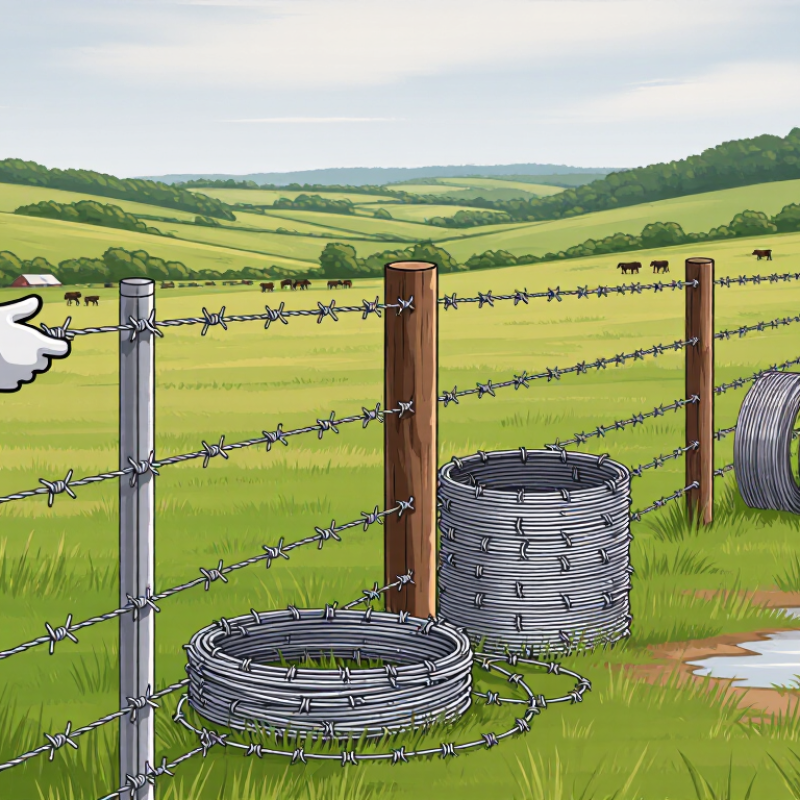
Top Barbed Wire Types for Sale in 2026

What Barbed Wire Is and How Its Design Works

Top Barbed Wire Types for Sale in 2026

Barbed wire is made from one or more twisted steel strands with sharp wire points fixed at intervals. The strands carry tension; the points discourage animals from pushing through or rubbing against the fence. Common designs use two- or four-point barbs, with the points angled outward from the central line. It looks simple. But strand gauge, coating, and tension all affect how well it performs outdoors.

ASTM A121-07(2021), the industry specification for metallic-coated carbon-steel barbed wire, includes barb spacings of 3, 4, and 5 inches and two- or four-point designs. Closer spacing means more points along a given length, while wider spacing leaves larger gaps. That alone does not determine suitability: terrain, animal size, corrosion exposure, and post spacing matter too. A specification cannot replace an on-site assessment, and that limitation is easy to overlook.

Tips: Check the product’s stated wire diameter, coating class, barb spacing, and strand construction against the fence plan. Inspect sample points for consistent shape and secure attachment. Keep strands evenly tensioned, but avoid overtightening across uneven ground; posts can lean, and wire can fail. Verify specifications against ASTM A121 and local agricultural guidance before purchase.

Top Barbed Wire Types for Sale in 2026: How the Design Works

Barb configuration is one way to compare common barbed wire designs. This chart shows the number of points on each barb.

How it works: Barbs are attached at intervals along line wire. A conventional two-point design has two projecting points per barb; a four-point design has four. Wire gauge, barb spacing, coating, and construction also vary by product, so point count alone does not indicate overall strength or suitability.

The Main Types of Barbed Wire Available in 2026

Top Barbed Wire Types for Sale in 2026
The Main Types of Barbed Wire Available in 2026

Barbed wire differs by strand design, barb spacing, and protective coating. Traditional two-strand wire is a common choice for perimeter fencing. Its twisted strands hold the barbs firmly, while galvanized steel helps resist rust in damp weather. Four-point barbs can provide a more pronounced deterrent, but they also call for careful handling and thoughtful placement.

Single-strand wire is lighter and may suit some existing fence layouts, though it can be less rigid. High-tensile options use stronger wire and can span longer distances when installed with compatible posts and tensioning. Coated wire adds another layer of weather protection; inspect the coating for scratches before purchase. Razor wire is a separate product, not simply another barbed-wire style, so compare products by their actual construction. Small details matter. I would not choose by price alone.

Tips: Match the wire to the fence structure and local conditions. Check strand count, barb spacing, wire gauge, coating, and compatibility with existing posts. For livestock areas, consider animal contact and seek experienced installation advice. Wear heavy gloves and eye protection when handling coils. A product listing may omit useful details, so ask the seller to confirm specifications before ordering.

Top Barbed Wire Types for Sale in 2026 - The Main Types of Barbed Wire Available in 2026
Type or Design Typical Construction Common Applications Key Characteristics Selection Notes
Conventional Double-Strand Barbed Wire Two line wires twisted together, with barbs secured at intervals. Usually supplied with a corrosion-resistant metallic coating. Livestock fencing, agricultural boundaries, and general perimeter fencing. A widely used, versatile design. The twisted strands hold the barbs in place and provide a familiar, adaptable fence-line option. Choose the wire gauge, barb spacing, coating, and roll length to suit the fence design and local requirements.
Single-Strand Barbed Wire One line wire carries barbs; construction and barb attachment vary by product. Light-duty agricultural boundaries and installations where a simpler wire arrangement is suitable. Uses less line wire than a comparable double-strand design, but its suitability depends on the fence layout and required strength. Check manufacturer specifications for tensile strength, barb attachment, and recommended post spacing before selecting.
Reverse-Twist Barbed Wire Two line wires are twisted in the opposite direction from conventional twist designs, with barbs fixed between the strands. Farm and ranch fencing, including boundaries intended to contain livestock. The reverse-twist construction can help keep barbs firmly positioned; actual performance depends on wire quality and installation. Compare the construction, wire gauge, and coating with the intended animal, terrain, and fence system.
High-Tensile Barbed Wire Made from higher-tensile-strength steel wire; available in different strand configurations and coatings. Long fence runs, agricultural perimeters, and other applications designed around high-tensile fencing. Can be used at relatively high tension when the complete fence system is designed for it. Correct bracing and installation are important. Use compatible posts, braces, fittings, and tensioning practices; do not assume every existing fence structure is suitable.
Galvanized Barbed Wire Barbed wire with a zinc coating applied to steel wire. It may use conventional, reverse-twist, or other constructions. Outdoor fencing where protection against atmospheric corrosion is needed. Zinc coating helps protect steel from corrosion. Coating mass and exposure conditions affect service life. Specify the coating level for the site conditions, especially in coastal, industrial, or otherwise corrosive environments.
PVC-Coated Barbed Wire Steel wire, commonly galvanized, covered with a polymer coating; the coating color and construction vary. Perimeter fencing where an additional coated finish is desired, subject to site and safety requirements. The polymer layer provides an outer finish and can add a barrier over the metal coating. Damage to the coating can expose the underlying wire. Check coating thickness, UV and weather suitability, and compatibility with the intended installation environment.

Materials, Coatings, and Key Product Specifications

For 2026, compare barbed wire by base metal, coating, and measurable dimensions—not appearance alone. Low-carbon steel is a common choice for general boundary fencing, while higher-tensile wire can span longer distances with fewer intermediate posts. It also needs careful tensioning. Check the stated wire diameter, barb spacing, and coil length; small differences affect installation and coverage.

Hot-dip galvanized wire has a zinc layer that helps resist moisture and surface rust. Ask for the coating weight or documented coating specification, since “galvanized” alone does not describe its thickness. PVC-coated wire adds a colored outer layer and can reduce direct exposure to weather, but cuts and scratches may reveal the metal underneath. For corrosive environments, compare stainless-steel options and confirm the grade on the product data sheet.

Fit matters. Match the wire’s tensile strength and diameter to the post spacing and expected load, and verify compatibility with clips or tensioning hardware. Packaging labels may list barb-point count and spacing, but coil length can vary between suppliers. A tidy specification sheet is useful, yet it cannot show handling quality or coating consistency. Request a sample or inspection records when those details matter.

How Barbed Wire Types Suit Different Applications

Barbed wire performs best when its construction matches the animals, terrain, and upkeep available. Conventional two-point wire suits many cattle boundaries where cost and routine repairs matter. Four-point wire adds sharper contact, but more barbs do not automatically make a better fence. Check strand tension, post strength, and the risk of animal injury before choosing.

High-tensile wire can span longer distances with fewer posts, making it useful across open pasture. It needs sound bracing at corners and gates; weak anchors can turn a long span into a maintenance problem. Galvanized wire is a practical choice in damp conditions, though coating quality and exposure affect service life. USDA NRCS Conservation Practice Standard 382 frames fence design around its purpose and site conditions. That matters on slopes.

The USDA 2022 Census of Agriculture counted roughly 729,000 farms with cattle and calves. The census does not track fence types, but it shows the scale of livestock operations needing reliable boundaries. For small paddocks or frequent animal handling, inspectability may matter more than maximum span. Horses can be more vulnerable to barbed wire injuries, so smooth alternatives deserve consideration.

A detail often missed: soil movement and vegetation can loosen or hide lower strands. Check the line after heavy rain, too.

What to Consider When Choosing Barbed Wire for Sale in 2026

Top Barbed Wire Types for Sale in 2026

Choosing barbed wire starts with the job, not the lowest price. For livestock boundaries, consider barb spacing, wire gauge, coating, and how tightly the fence can be tensioned. USDA NASS reported 86.7 million cattle and calves in the United States on January 1, 2025, in its Cattle report. That scale underscores why dependable boundary maintenance matters, though it does not make one wire design right for every property. Details matter.

For long runs, high-tensile wire can reduce sag when installed with compatible posts and proper tension. Softer wire may be easier to handle during repairs, but can need more frequent adjustment. Galvanized coatings help resist corrosion; in damp or coastal settings, compare coating specifications rather than relying on appearance. ASTM A121 sets requirements for metallic-coated carbon-steel barbed wire, offering a useful benchmark when checking product documentation.

Before buying, measure the fence line and inspect corners, slopes, gates, and existing posts. These points often dictate labor and hardware costs more than the wire itself. Match barb spacing and wire construction to the animals, terrain, and expected maintenance schedule. A detail that looks minor on a sales sheet can become a nuisance after installation. I would also allow room in the budget for tensioning tools and replacement fasteners; that estimate is easy to get wrong.