
Search

What Are the Top Types of Hydraulic Cylinder Parts?

Hydraulic cylinders convert fluid pressure into controlled linear force, but their performance depends on more than the cylinder barrel alone. Hydraulic Cylinder Parts work together to guide movement, contain pressure, and transfer force to a load. A worn seal may cause leakage; a damaged rod can score the cylinder head. Small details matter.

This guide introduces the main types of hydraulic cylinder parts, including barrels, pistons, piston rods, seals, end caps, and mounting components. It explains what each part does and how material, fit, and operating conditions affect its service life. For example, a rod exposed to dust or moisture may need a durable surface finish and effective wiper seals. The right choice still depends on the cylinder’s design, pressure range, fluid, and working environment. There is no universal parts list for every application.

It is easy to focus only on visible damage. That can miss the cause. A leaking cylinder might have a failed seal, but contamination, misalignment, or excessive side loading may also contribute. Understanding how the parts interact helps readers inspect equipment more thoughtfully and discuss repairs with qualified technicians. Some designs differ in small, important ways, so always check the manufacturer’s specifications before selecting replacement components.
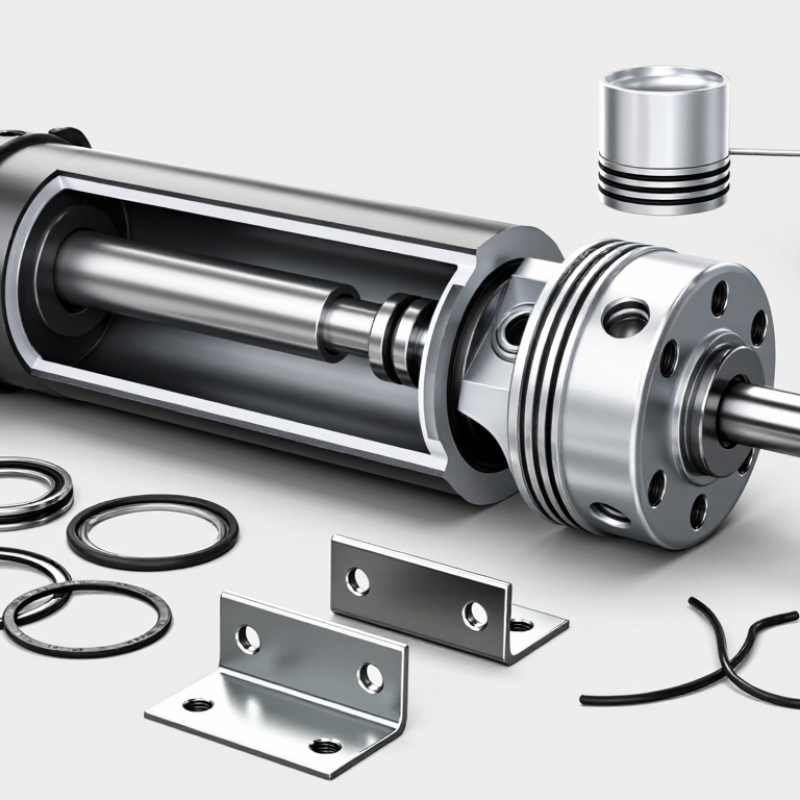
What Are the Top Types of Hydraulic Cylinder Parts?

Cylinder Barrel and End Caps: The Pressure-Containing Parts

The cylinder barrel forms the main pressure chamber, guiding the piston as hydraulic fluid moves through the cylinder. Its wall must withstand working pressure and repeated load cycles without excessive expansion. Engineers select dimensions and materials for the application, then check the design against pressure peaks, mounting forces, and operating temperature. The details matter.

Inside, the barrel bore needs a controlled surface finish. A rough bore can wear seals quickly, while an unsuitable finish may also cause problems. “Smoother” is not always better; seal type and manufacturer specifications should guide the target. Ports and welded fittings need careful placement, since local stress can build around openings.

End caps close the barrel and support components such as the rod guide and seals. Depending on the design, they may be threaded, bolted, or welded in place. Their joints must contain pressure and remain aligned under load. Small alignment errors can increase friction or uneven wear. During inspection, look for leaks, corrosion, damaged threads, and distortion near ports or joints. A cylinder can still operate while early damage develops, so appearance alone may not tell the whole story.

Hydraulic Cylinder Barrels and End Caps: Pressure-Containing Parts

The barrel contains hydraulic pressure, while the end caps seal the cylinder and withstand pressure-driven axial loads. The chart shows the calculated force on a closed end cap at a constant pressure of 20 MPa (200 bar), using force = pressure × bore area. Actual component requirements depend on cylinder design, materials, and operating conditions.

Piston and Piston Rod: The Force-Transmitting Parts

The piston and piston rod turn hydraulic pressure into controlled movement. The piston fits inside the cylinder barrel and separates pressure between its two sides. When fluid enters one chamber, pressure pushes the piston along the barrel. The rod transfers that movement to a machine component, such as a loader arm or press plate. That sounds simple. In practice, both parts must handle changing loads without excessive friction or leakage.

Tips: Check the rod for scratches, rust, or bends during routine inspection. Even a small surface defect can wear a seal and cause fluid leakage. Keep the rod clean when servicing the cylinder.

The piston’s seals help limit fluid bypass, while the rod’s smooth surface supports reliable sealing as it moves. A worn seal may reduce force or make movement uneven. Misalignment can also place extra stress on the rod and guide components. Match replacement parts to the cylinder’s specifications, including dimensions and operating conditions. Visual checks are useful, but they cannot reveal every internal defect. If performance changes, a qualified inspection can help identify the cause before further wear develops.

Seals and Wear Rings: The Leakage- and Friction-Control Parts

Seals and wear rings do different jobs inside a hydraulic cylinder. Seals hold pressurized oil where it belongs, while wear rings guide the piston and rod. Small parts. Big consequences. A nicked piston seal can let oil bypass the piston, reducing force and causing uneven movement. Rod seals face another challenge: they must limit leakage while keeping dust and moisture outside. A thin oil film is useful, but visible drips often signal wear, damage, or a poor fit.

Wear rings help prevent metal-to-metal contact between moving parts. They also keep the piston centered as side loads shift during operation. Without that support, a small misalignment can score the cylinder bore. Material choice matters: temperature, fluid type, pressure, and operating speed all affect seal and ring performance. So does the shaft or bore finish. A seal cannot compensate for a rough surface indefinitely.

When troubleshooting, inspect the whole sealing area, not just the seal itself. Check for scratches, hardened edges, flattened rings, and unusual side play. Dirt introduced during assembly can shorten service life quickly. It is tempting to blame the seal alone, but that is not always the full story. Correct sizing and careful installation matter, though even good parts wear over time.

What Are the Top Types of Hydraulic Cylinder Parts? - Seals and Wear Rings: The Leakage- and Friction-Control Parts
Part Type Typical Location Primary Function Common Materials Key Selection Considerations
Piston seal Installed around the piston, between the piston and cylinder bore Limits fluid bypass across the piston, helping maintain pressure and controlled movement. Polyurethane, nitrile rubber (NBR), PTFE compounds, or elastomer-energized PTFE Match the seal profile to pressure, speed, fluid, temperature, bore finish, and whether the cylinder is single- or double-acting.
Rod seal Located in the cylinder head or gland around the moving rod Retains hydraulic fluid as the rod moves in and out of the cylinder. Polyurethane, NBR, PTFE compounds, or combinations of elastomers and engineered plastics Consider operating pressure, reciprocating speed, fluid compatibility, temperature, rod surface finish, and resistance to extrusion.
Wiper (scraper) seal At the outer edge of the cylinder head, facing the environment Removes dirt, moisture, and other contaminants from the rod during retraction, helping protect internal components. Polyurethane, NBR, or other application-suitable elastomers Choose a profile and material suited to the level of contamination, outdoor exposure, temperature, and rod condition.
Static seal Between stationary parts, such as a cylinder head and barrel or a port connection Prevents leakage at joints where the sealed components do not move relative to one another. NBR, fluorocarbon rubber, polyurethane, or PTFE, depending on the seal design and service conditions Selection depends on groove dimensions, fluid compatibility, temperature, pressure, and the joint’s assembly requirements.
Piston wear ring (guide ring) Fitted around the piston, usually in a dedicated groove Guides the piston and helps prevent metal-to-metal contact with the cylinder bore; it is not a pressure seal. Fabric-reinforced phenolic resin, PTFE-based materials, or other engineered bearing plastics Consider load, clearance, temperature, fluid, bore condition, and the manufacturer’s specified ring dimensions.
Rod wear ring (guide ring) Installed in the cylinder head or gland to guide the rod Supports side loads and helps keep the rod centered, reducing contact between the rod and gland. Fabric-reinforced phenolic resin, PTFE-based materials, or other engineered bearing plastics Check rod diameter, guide width, available clearance, side-loading conditions, and compatibility with the hydraulic fluid.

Rod Gland and Bearings: The Guiding and Supporting Parts

A rod gland guides the piston rod where it exits the cylinder and helps retain hydraulic fluid. It commonly holds a rod seal, a wiper, and a bearing surface. The seal limits leakage, while the wiper scrapes dust and moisture from the rod during retraction. Small details matter. A nick on the rod can damage a fresh seal surprisingly quickly.

The bearing supports the rod and helps keep it aligned as the cylinder moves under load. It also reduces direct metal contact between the rod and gland. Side loads, grit, or uneven mounting can wear the bearing unevenly, even when the cylinder still operates. In practice, these parts work together, so replacing a seal alone may not solve recurring leakage. Real wear patterns can be less clear than a diagram suggests; inspect the rod, gland, and bearing as a set.

Tips: Check the exposed rod for scoring, rust, or a dull wear track. Look for uneven bearing wear and damaged wiper edges. Keep replacement parts clean during assembly, and follow the cylinder maker’s service specifications. If the cause is uncertain, measure before ordering parts.

Ports, Mounts, and Fasteners: The Connection and Installation Parts

Hydraulic cylinder ports, mounts, and fasteners may look secondary to the barrel and piston.

They determine how fluid enters the cylinder and how force reaches the machine. Ports must match the system’s fittings, pressure rating, and flow requirements. Check thread type and sealing method before assembly. A fitting can feel tight yet still leak if the threads do not match. Keep openings capped during storage. Even a small particle can damage seals or score a working surface.

Mounts transfer cylinder force into the surrounding structure.

Clevis mounts allow pivoting movement, while flange or trunnion mounts suit different installation layouts. The right choice depends on the cylinder’s motion and load direction. Keep the mounting points aligned through the full stroke. Side loading can wear seals and the rod unevenly.

Easy to miss. A bracket that looks straight at rest may shift under load.

Fasteners hold the assembly in place and help maintain alignment.

Use the specified size, grade, and tightening method for the equipment. Do not substitute a bolt based on appearance alone. Inspect threads, locking features, and mounting surfaces for wear or damage. Recheck fasteners during planned maintenance, especially where vibration is present.

Still, inspection cannot compensate for poor alignment; that part deserves a second look before operation.