Search

How to Choose the Right Pressure Tanks in 2026?

Choosing the right pressure tanks in 2026 begins with the system, not the catalogue. A tank that looks oversized may still fail under rapid cycling. I have seen pumps start every few minutes when installers ignored drawdown. That pattern increases wear, noise, and service costs. The correct choice depends on fluid, working pressure, temperature, flow demand, installation space, and expected duty cycle. Water, compressed air, and process fluids require different designs. Small details matter. A 200-liter tank needs clearances, lifting access, and a safe drain route. Those details are often missed during online purchasing.

This guide explains how to compare tank volume, materials, diaphragm construction, connections, corrosion resistance, and monitoring options. It also considers manufacturer documentation, traceability, testing, and support after delivery. Reliable suppliers should provide nameplate data, pressure ratings, inspection records, and maintenance instructions. Independent verification may be necessary for critical applications. Local codes and site rules must guide final approval. Product pages alone are not enough. A pressure gauge can reveal unstable operation, while a temperature sensor may expose conditions the original design never considered. Smart features help, but they do not replace sound engineering.

There is no universally best tank. An inexpensive model can become costly when its membrane cannot tolerate the fluid. Conversely, the largest tank is not automatically the safest or most efficient. Assumptions can be wrong. We will question them. By examining operating conditions, failure risks, lifecycle cost, and supplier credibility, readers can make a more defensible decision. The aim is practical selection, not a perfect spreadsheet. Confirm every critical detail with a qualified professional before installation and operation.
How to Choose the Right Pressure Tanks in 2026?

Pressure Tank Basics: Types, Functions, and Key Applications

How to Choose the Right Pressure Tanks in 2026?

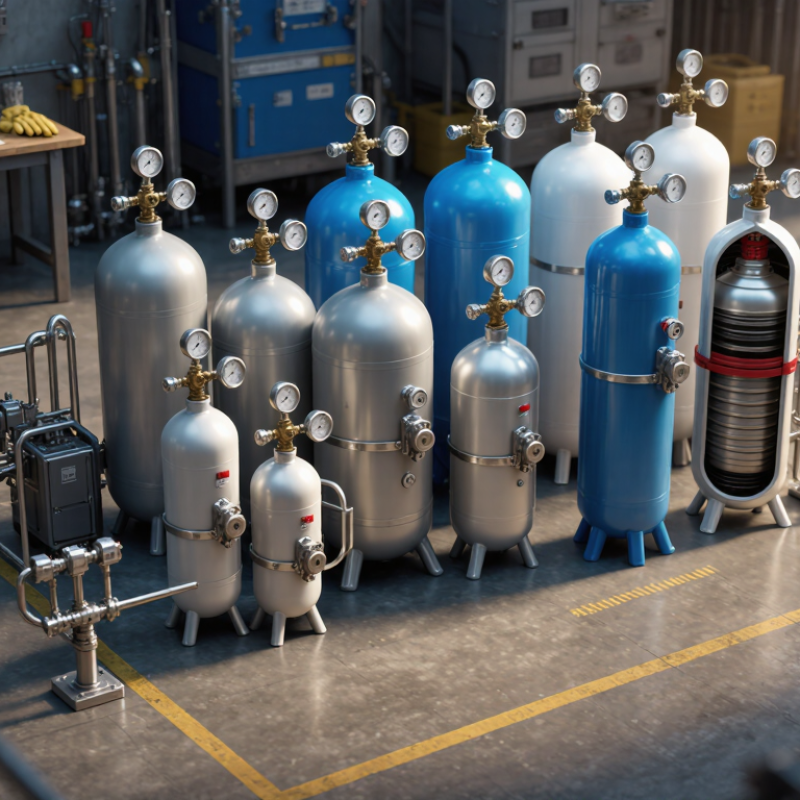
Pressure tanks store pressurized water and protect pumps from frequent starting. Diaphragm tanks suit domestic water systems. Bladder tanks offer stable separation between water and compressed air. Hydropneumatic tanks support booster systems, irrigation, and variable demand. Expansion tanks manage thermal growth in closed heating circuits. Pulsation dampeners reduce pressure shocks near reciprocating pumps. Each design solves a different problem.

Sizing requires more than reading the pump label. Record peak flow, cut-in and cut-out pressure, temperature, water quality, and available space. A tank that is too small may cause rapid cycling. An oversized tank can increase cost and complicate maintenance. The U.S. Department of Energy reports that water heating uses about 18% of household energy consumption. Proper expansion control therefore matters in heated-water systems. The International Energy Agency reports that buildings consume about 30% of global energy and create 26% of energy-related emissions. Efficient pressure control supports broader energy goals, although tank performance depends heavily on installation quality. Check pre-charge pressure regularly. Inspect the diaphragm. Verify relief protection and vessel certification under applicable pressure-vessel rules. Field conditions often differ from design assumptions. My first choice is not always perfect; demand changes, air loss, and poor pipe layout can alter results. A practical selection leaves room for inspection, replacement, and future flow changes.
How to Calculate the Required Pressure Tank Capacity

How to Choose the Right Pressure Tanks in 2026?

How to Calculate the Required Pressure Tank Capacity

Pressure tank sizing starts with the pump’s required runtime, not the tank’s physical appearance. A practical target is one minute between pump starts. For a 10-gallon-per-minute pump, the required drawdown is about 10 gallons. This protects the motor from frequent cycling and supports steadier water pressure.

Use this calculation: required tank volume = required drawdown ÷ usable drawdown fraction. The fraction depends on the cut-in pressure, cut-out pressure, and pre-charge setting. For example, a 40/60 psi system may provide roughly 27% usable volume. A 10-gallon drawdown therefore requires approximately a 37-gallon tank. Use absolute pressure for accurate calculations, and confirm the result with the tank manufacturer’s performance chart. Small pressure losses can change the answer.

Tips: Set pre-charge about 2 psi below cut-in pressure when the tank is empty. Check it with a calibrated gauge. Measure actual pump flow instead of trusting an old label. Leave extra capacity for future fixtures, irrigation, or seasonal demand. I once underestimated household demand because I counted appliances, but ignored short, repeated water draws. That mistake caused unnecessary cycling. Tank charts also vary, so a rough formula should support field measurements, not replace them.

How to Choose the Right Pressure Tank in 2026

Estimated nominal pressure-tank capacity required for a one-minute minimum pump run time

The calculation uses a 30/50 psi pressure-switch setting and assumes that approximately 37% of a bladder tank's nominal volume is usable as drawdown. Required tank capacity = pump flow rate × minimum run time ÷ drawdown fraction. For example, a 10 GPM pump requires about 27 gallons of nominal tank capacity for a one-minute minimum run time. Select the next available tank size above the calculated value and confirm the actual drawdown rating for the selected pressure range.

How to Compare Materials, Pressure Ratings, and Safety Factors

How to Choose the Right Pressure Tanks in 2026?

Material selection starts with the stored fluid, temperature, and corrosion risk. Carbon steel offers strength and lower cost, but moisture and oxygen demand protective treatment. Stainless steel resists many corrosive fluids, although chloride exposure can still cause stress corrosion cracking. Composite tanks reduce weight. They may complicate inspection and repair. The 2024 IEA Global Hydrogen Review projects announced low-emissions hydrogen capacity could reach 49 million tonnes annually by 2030. That growth increases demand for lighter, carefully qualified storage systems.

Pressure ratings require more than matching the operating pressure. Record normal pressure, surge pressure, vacuum conditions, and temperature changes. Then compare the result with the tank’s maximum allowable working pressure. ASME BPVC Section VIII and EN 13445 provide established design and inspection methods. Their allowable stresses depend on material strength, weld quality, temperature, and thickness. Do not treat a “300 psi” label as a complete engineering decision.

Safety factors should follow the governing code, not personal preference. Relief devices, hydrostatic testing, fatigue checks, and corrosion allowances matter equally. ISO 4126-1 provides requirements for safety valves and relief devices. Keep inspection access visible around every connection. A practical review should include five-year service data, failed weld records, and actual fluid chemistry. I have seen specifications overlook seasonal temperature changes. That is an uncomfortable gap. Perfect calculations can still support a poor tank choice when field data is incomplete.

How to Choose the Right Pressure Tanks in 2026? - How to Compare Materials, Pressure Ratings, and Safety Factors

Tank Material / Construction Typical Applications Typical Working Pressure Range Temperature Capability Corrosion Resistance Main Advantages Main Limitations Safety and Inspection Considerations
Carbon Steel Compressed air receivers, hydropneumatic systems, process vessels, and general industrial service Approximately 6–40 bar (87–580 psi), depending on design, wall thickness, diameter, and code classification Commonly about −10°C to 200°C (14°F to 392°F); confirm the design temperature and material grade Moderate to low without internal coating, corrosion allowance, drainage, or corrosion control High strength, broad availability, economical fabrication, and good resistance to mechanical damage Heavy; vulnerable to internal and external corrosion; requires suitable coating, drainage, and inspection Use a correctly sized pressure-relief valve, pressure gauge, drain, and periodic internal or non-destructive inspection where required
Stainless Steel Potable water, food and pharmaceutical processes, hygienic service, and corrosive environments Approximately 6–40 bar (87–580 psi) for many standard vessel designs; higher ratings require specific engineering approval Often about −20°C to 200°C (−4°F to 392°F), depending on alloy, weld procedure, gasket, and code limits Good to excellent in many aqueous environments; chloride exposure can cause pitting or stress-corrosion cracking Good cleanliness, durability, and corrosion resistance; suitable for demanding liquid services Higher purchase cost; alloy selection and welding quality strongly affect service life Check chloride concentration, weld condition, crevice areas, relief-device set pressure, and compliance with the applicable vessel code
Glass-Fiber-Reinforced Plastic (FRP) Water treatment, filtration, softening, demineralization, and low-to-moderate pressure chemical service Commonly about 2–10 bar (29–145 psi); the exact rating is highly dependent on vessel diameter, resin system, and temperature Typically about 4°C to 49°C (39°F to 120°F); elevated temperature can significantly reduce allowable pressure Very good against many water-treatment chemicals; compatibility must be verified for each chemical and concentration Lightweight, non-rusting, and often lower maintenance than unlined carbon steel Lower temperature and pressure capability; can be damaged by impact, ultraviolet exposure, vacuum, or unsupported piping loads Prevent vacuum conditions unless specifically designed for them; support connected piping and inspect for cracking, bulging, and resin degradation
Lined Carbon Steel Corrosive liquids where structural strength is needed together with an internal barrier Approximately 6–25 bar (87–363 psi), subject to liner type, backing-vessel design, and temperature Often about 0°C to 120°C (32°F to 248°F); the liner normally determines the practical limit Good when the liner is chemically compatible and remains intact; damage can expose the steel substrate Combines steel strength with improved chemical resistance and can cost less than a solid corrosion-resistant alloy Liner blistering, pinholes, permeation, thermal shock, and difficult repair inspection can limit service life Inspect the liner and backing shell separately where possible; prevent rapid temperature changes and verify compatible cleaning chemicals
Diaphragm or Bladder Tank Domestic and commercial water boosting, well systems, pressure stabilization, and small closed-loop systems Commonly about 2–10 bar (29–145 psi); select the vessel from the system maximum allowable working pressure Often about 4°C to 90°C (39°F to 194°F), depending on membrane material and service The wetted side depends on the liner, bladder, or diaphragm material; potable-water approval may be required Reduces pump cycling, provides stable pressure, and separates water from the tank shell in many designs Membrane fatigue, incorrect pre-charge, and loss of air can reduce usable volume and increase pump cycling Check pre-charge with the tank isolated and depressurized; never exceed the tank or relief-valve pressure rating
Composite High-Pressure Cylinder Breathing air, industrial gases, medical gases, and portable high-pressure storage Commonly about 200–300 bar (2,900–4,350 psi) for many gas-cylinder designs; exact limits depend on cylinder type and approval Typically about −40°C to 65°C (−40°F to 149°F), subject to the cylinder specification and gas service Generally resistant to atmospheric corrosion; liners and composite overwraps require protection from chemicals and impact High pressure capacity with lower weight than many all-metal cylinders Sensitive to impact, heat, chemical attack, ultraviolet exposure, and damage that may not be visible externally Follow the cylinder's approved inspection interval, filling procedure, valve requirements, and transport regulations; do not repair damaged composite material

Pressure Rating Checklist

Choose a tank with a maximum allowable working pressure above the highest credible system pressure, including pump shutoff pressure, thermal expansion, regulator failure, and transient pressure. The relief-valve set pressure must not exceed the protected tank's allowable limit.

Safety-Factor Interpretation

Do not compare tanks using a single generic safety-factor number. Pressure-vessel design factors depend on the governing code, material properties, weld efficiency, geometry, temperature, fatigue, corrosion allowance, and manufacturing controls.

Common Standards to Verify

Confirm the applicable jurisdictional requirements and vessel standard, such as ASME Boiler and Pressure Vessel Code Section VIII, EN 13445, PED 2014/68/EU, ISO 9809 for certain gas cylinders, or the relevant local pressure-equipment regulation.

Note: Pressure and temperature values shown are representative comparison ranges, not universal ratings. Final selection must be based on the tank nameplate, certified design documents, fluid compatibility, installation conditions, applicable code, and inspection requirements.

How to Select the Right Tank for Water, Industrial, and HVAC Systems

How to Choose the Right Pressure Tanks in 2026?

Selecting the right tank starts with the system, not the available equipment. For domestic water, confirm peak flow, pump capacity, pressure range, and required drawdown. A larger tank may reduce pump cycling, but it can also increase cost and installation space. Check whether the tank is approved for potable water and whether its internal materials suit local water conditions. Measure the pre-charge accurately before commissioning.

Industrial systems demand closer attention. Review operating pressure, temperature, fluid chemistry, surge frequency, and maintenance access. A tank for clean water may fail quickly with corrosive fluids or abrasive particles. Steel thickness, lining quality, connection size, and safety controls should match the actual duty cycle. Pressure relief protection remains essential, even when calculations appear conservative.

HVAC tanks serve a different purpose. Expansion tanks manage fluid volume changes as water heats and cools, so sizing depends on system volume, temperature range, and fill pressure. Closed-loop systems often need a diaphragm tank with compatible membrane materials. An undersized tank can cause frequent relief-valve discharge. That detail is easy to miss.

Do not rely on catalog capacity alone. Ask for tested performance data, material documentation, and installation guidance. Local codes may change the acceptable design. It is also wise to leave service clearance around valves and gauges. A tank can be technically correct yet difficult to inspect. That is a costly oversight.

How to Verify Installation, Maintenance, and Regulatory Compliance

Choosing the right pressure tank in 2026 requires more than matching capacity and operating pressure. Installation records must confirm the tank’s design code, nameplate data, material certificates, and test pressure. ASME Boiler and Pressure Vessel Code Section VIII remains a widely recognized reference for pressure-vessel design. However, local approval rules may also apply. Never assume one certificate satisfies every jurisdiction.

During commissioning, verify stable foundations, correct pipe alignment, accessible drains, and a correctly rated relief valve. Check the gauge against a calibrated reference. Inspectors should record weld examinations, hydrostatic tests, and safety-device settings. Maintenance should include visual checks for corrosion, coating damage, leakage, and blocked drains.

The U.S. Department of Energy’s Compressed Air Sourcebook reports that leakage can waste 20–30% of compressor output in poorly maintained systems. That figure is not universal, but it shows why small leaks deserve attention. A neglected drain can quietly become a serious weakness.

Tips: Keep a signed inspection log beside the tank. Record serial numbers, pressure readings, repair dates, and inspector qualifications. Follow API 510 or equivalent inspection practices where applicable, and confirm requirements with the local authority. Do not rely only on a checklist. In real plants, labels fade, gauges drift, and maintenance intervals get missed. A second review often catches what the first inspection overlooks.