Top 10 Steel Tank Manufacturers in China for Global Buyers
Choosing among steel tank manufacturers in China involves more than comparing prices or browsing polished product photos. Global buyers must match a supplier’s capabilities to the tank’s purpose, working conditions, and project requirements. A water storage tank, for example, may need different materials, coatings, and inspection records than an industrial process vessel. Details count.
This guide to the top 10 steel tank manufacturers in China offers a practical starting point for comparing suppliers. It considers product range, manufacturing experience, quality controls, customization, export support, and communication. Buyers should request evidence, not rely on broad claims: material traceability, welding procedures, inspection reports, coating specifications, and references for similar projects can help clarify what a factory actually delivers. A responsive sales team is useful, but it cannot replace technical review.
A ranked list has limits. Company capabilities, lead times, and service quality can change, while a strong factory may not suit every project. Treat the rankings as a shortlist, then verify current certifications and requirements with each manufacturer. Ask how dimensions, nozzles, access openings, and delivery arrangements will be confirmed before production. These conversations may feel slow. They can prevent costly surprises later. The right choice is not always the largest supplier or the lowest quotation; it is the one that can document its process and answer specific questions clearly. Some uncertainty remains until drawings and specifications are reviewed, and buyers should plan for that.
What Steel Tank Manufacturers Produce and Where Their Tanks Are Used
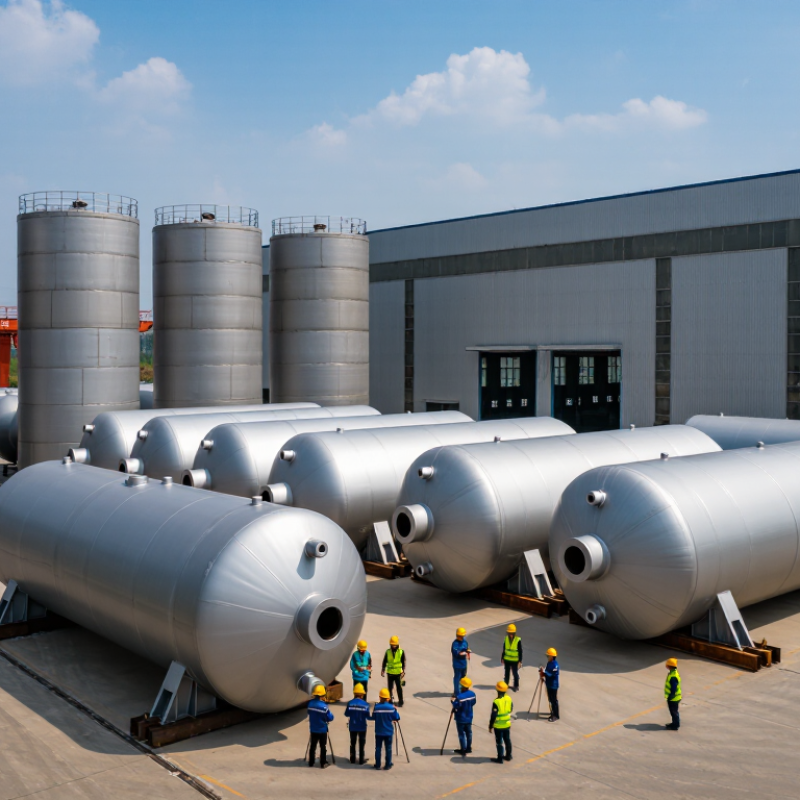
Steel tank manufacturers turn plate into containers for storage, treatment, and process service. Typical products include bolted or welded water tanks, shop-built process vessels, and stainless steel tanks for food plants. Carbon steel suits many large water, fire-protection, and bulk-liquid installations. Stainless steel is often selected where hygiene or corrosion resistance matters. Some manufacturers also build pressure vessels, a distinct capability requiring specific design, testing, and code compliance. The details matter. Tank selection depends on the stored medium, temperature, site loads, access, and maintenance—not capacity alone.
Demand has a practical context. UNESCO’s 2024 World Water Development Report estimates freshwater demand has risen about 1% annually over four decades. WHO and UNICEF’s 2023 Joint Monitoring Programme reports that 2.2 billion people lacked safely managed drinking water in 2022. These figures do not prove demand for steel tanks, but they highlight an infrastructure gap storage can help address. Buyers use tanks at municipal treatment plants, rural water systems, factories, farms, and fire-water networks. Fuel terminals and industrial sites may need secondary containment and compatible linings. Check drawings, weld procedures, coatings, inspection records, and applicable design standards, such as AWWA D100 or API 650. A tank can look simple; corrosion, foundations, and access are easy to underestimate.
How to Assess Chinese Steel Tank Manufacturers
How to Assess Chinese Steel Tank Manufacturers
A capable steel tank manufacturer should explain how its process matches your tank’s service conditions. Share the required capacity, operating pressure, stored medium, temperature range, and installation environment. Then check whether the proposed design addresses these details, rather than relying on a generic quotation. Ask for fabrication drawings, material specifications, and a clear list of exclusions. Small gaps matter.
Review how materials and welds are controlled. Request sample material certificates and ask how plate identity is tracked after cutting. A practical supplier can describe its welding procedures, welder qualifications, inspection stages, and records for each unit. Ask which welds receive visual or nondestructive examination, and why. Look closely. Claims about “strict quality” mean little without dated inspection records, calibrated tools, and acceptance criteria.
Check the testing and delivery plan before placing an order. Confirm whether dimensional inspection, leak testing, or hydrostatic testing applies to your design, and request the documented results. For coated tanks, ask about surface preparation, coating thickness checks, and repair procedures. Speak with previous customers about schedule changes and after-sales response, not just product quality. A factory visit or live video walk-through can reveal storage and handling practices, though it cannot prove everything. No checklist catches everything. Record open questions in writing, and compare answers for technical detail, consistency, and willingness to acknowledge limitations.
Top 10 Steel Tank Manufacturers in China for Global Buyers
For global buyers comparing the top 10 steel tank manufacturers in China, a shortlist should start with the tank’s duty, not a sales ranking. China produced about 1,005 million tonnes of crude steel in 2024, according to the World Steel Association’s World Steel in Figures 2025. This signals a deep industrial supply base, but it does not prove any factory can meet a specific project’s requirements. Ask for recent project records, material traceability, welding procedures, inspection plans, and clear delivery terms. A polished brochure can still leave gaps.
Review the details that affect service life: steel grade, plate thickness, weld inspection, corrosion protection, and site conditions. For atmospheric welded tanks, check whether the design follows API 650 or the project’s specified code. Request drawings and inspection records for a comparable tank, then confirm who performs testing and how defects are corrected. A low quotation may exclude important inspection or coating work. That trade-off deserves scrutiny.
Tips: Visit the workshop if practical. Check plate storage, welding stations, and coating controls. Compare hydrostatic-test procedures and coating-thickness records across suppliers. Record unanswered questions, too; a few gaps may be normal, but vague answers should prompt a closer review.
Typical Material Densities for Storage Tanks
Approximate density values help compare common tank materials. Steel is substantially denser than aluminum and plastics; actual tank weight also depends on design, dimensions, and wall thickness. Values are typical references, not manufacturer-specific data.
How to Compare Products, Certifications, and Export Capabilities
A useful comparison starts with the tank’s job, not its quoted price. Define the stored medium, working temperature, pressure, site conditions, and required capacity. Then compare steel grade, plate thickness, welding method, corrosion protection, and inspection access. Ask for drawings and a bill of materials, not just a product brochure. A coating that suits a dry inland site may fail near a salty coastline.
Check whether certificates cover the actual factory, product, and process being offered. Request current documents, issuing-body details, and inspection records that match the tank’s configuration. Requirements can differ by destination and project, so confirm applicable standards with your engineer or local authority. Paperwork matters. A certificate alone does not prove consistent weld quality; review weld procedures, non-destructive testing reports, and pressure-test records where relevant.
Export capability shows up in practical details. Ask how the tank will be packed, protected from moisture, and prepared for lifting and unloading. Confirm port options, lead time, spare-part support, and who handles export documents. Request references for comparable overseas projects, while recognizing that a similar tank may still face different site conditions. One awkward question is worth asking: what changes if the first inspection finds a defect? A clear answer on corrective work and responsibility can reveal more than a polished presentation.
How to Select a Supplier and Plan an International Purchase
Choosing a steel tank supplier starts with the duty the tank must perform. Share the stored medium, operating temperature, pressure, capacity, and installation site. Provide drawings when available, but confirm who owns final design approval. A tank built for indoor water storage may not suit outdoor service or frequent temperature changes. Details matter.
Review evidence, not only sales claims. Request material certificates, welding procedures, inspection records, and test reports for comparable projects. Ask how the supplier checks dimensions, weld seams, and protective coatings. A clear inspection plan should name the checks, timing, and acceptance criteria. If a document is missing, pause and ask why. I have seen small drawing mismatches become costly site delays; they are easy to overlook during a rushed quote.
Plan the international purchase before production begins. Confirm packing dimensions and lifting points, then ask a freight forwarder about route, container fit, and handling limits. Agree on delivery terms, payment milestones, production dates, and the documents required by your importing process. Build time for drawing approval and independent inspection into the schedule. Keep one written specification as the reference for every revision. Communication can still get messy across time zones, so record decisions by email and review the final drawings carefully.