Search

Top 10 Types of Water Storage Tanks for Buyers

Choosing a water storage tank is not just a matter of picking the largest model that fits your budget. The right choice depends on how much water you need, where the tank will sit, and what it must withstand. A household collecting rainwater has different priorities from a farm, workshop, or emergency supply site. Small details matter. A narrow access gate, uneven ground, or strong afternoon sun can change which design works best.

This guide explores ten common tank types, including polyethylene, steel, concrete, fiberglass, underground, and collapsible models. Each has practical trade-offs in cost, capacity, installation, maintenance, and expected service life. For example, a slimline tank may fit beside a house, while a large steel tank can serve a broader storage need. Yet material alone does not tell the whole story. Check the tank’s intended use, available fittings, foundation requirements, and care instructions before buying. Confirm that the product is suitable for storing water for your specific purpose.

Capacity estimates are often less precise than buyers expect. Seasonal rainfall, daily demand, and delivery schedules can all affect the amount you actually need. A tank that looks ideal in a catalogue may prove awkward once installed. That is worth considering. The comparisons ahead offer a clear starting point, not a substitute for checking site conditions and manufacturer guidance. With those basics in view, you can narrow the options and choose with greater confidence.
Top 10 Types of Water Storage Tanks for Buyers

What Water Storage Tanks Are and How They Work

A water storage tank is a container that holds water until a home, farm, or facility needs it. It may receive water from a well, municipal line, rainwater system, or treated supply. Its purpose is to keep water available and, when properly designed and maintained, protect it from debris and other contaminants. Simple, but not effortless. A tank’s material, shape, and location affect its capacity, temperature, and maintenance needs. For example, a covered tank in shade usually heats less than one exposed to afternoon sun. One detail is easy to overlook: storage alone does not make water safe to drink.

Many systems fill through an inlet controlled by a float valve, sensor, or pump. As water leaves through an outlet, gravity or a pressure pump carries it to taps and equipment. An elevated tank can provide pressure through gravity; a tank at ground level usually needs a pump. A vent allows air to move in and out, while an overflow pipe directs excess water away. Screens and sealed access covers help keep out debris and insects. Still, details vary by system. Sediment can collect at the bottom even when the water looks clear, so inspections and cleaning matter. Follow local water-quality guidance and the tank manufacturer’s instructions.

Key Factors to Consider Before Buying a Water Storage Tank

Before choosing a water storage tank, estimate actual use rather than buying by appearance. A household, garden, or small business may need very different reserves. Check daily demand, delivery frequency, and how many days of backup you want. Leave room for seasonal changes. Measure twice.

Next, consider what the water will be used for. Drinking water requires a tank material and fittings rated for potable water; irrigation may allow more options. Ask how the material handles sunlight, temperature swings, and the water’s chemistry. A dark tank can limit light exposure, but placement and maintenance still matter.

The site can decide the purchase. Measure the ground, access route, doorway, and overhead clearance, including space needed for installation. A full tank is extremely heavy, so confirm that its base is level, stable, and suitable for the load. Check inlet, outlet, overflow, drain, and vent positions before ordering. Access matters.

Think about cleaning, inspection, and replacement parts, not just the initial price. A narrow opening may make interior checks awkward. That is easy to overlook. Compare warranties and ask what routine maintenance the manufacturer recommends. Local requirements for potable-water systems may also apply. The perfect capacity is hard to predict; a little flexibility can be useful, but oversizing adds cost and takes up space.

Ten Common Types of Water Storage Tanks

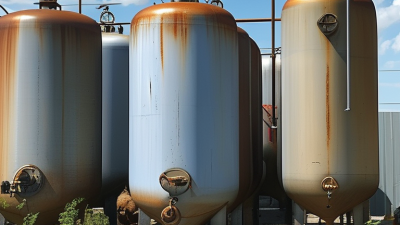
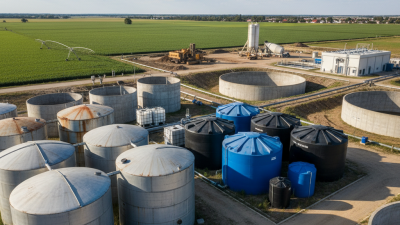
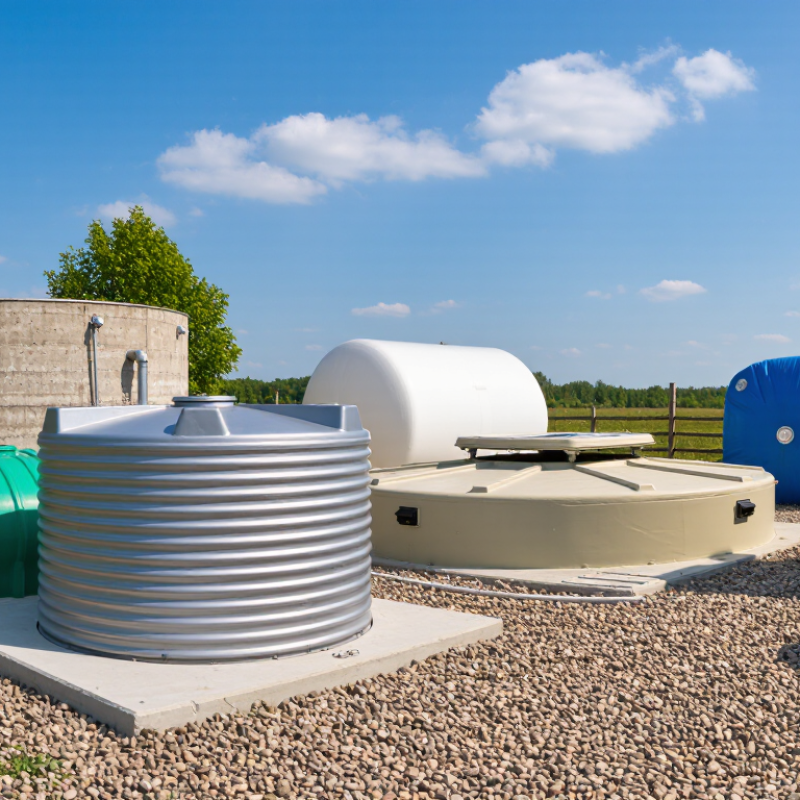
Water storage tanks commonly include polyethylene, fiberglass-reinforced plastic, stainless steel, welded steel, bolted steel, concrete, elevated steel, underground concrete, bladder, and collapsible fabric types. Polyethylene tanks are light and easy to place beside a building. Fiberglass resists corrosion, while steel tanks suit larger fixed installations. Concrete works well underground, but needs careful inspection for cracks. Bladder and collapsible tanks can serve temporary sites. Small detail matters. Access for cleaning, inlet placement, and a firm, level base can matter as much as tank material.

The right choice depends on daily demand, peak flow, water quality, climate, and available space. The UN World Water Development Report 2024 estimates agriculture accounts for about 70% of global freshwater withdrawals, underscoring why irrigation storage needs careful sizing. USGS Circular 1441 reports total U.S. water withdrawals of about 322 billion gallons per day in 2015; that figure covers many uses, not tank demand alone. Treat such statistics as context, not a sizing formula. A tank that looks ample on paper may fall short during a dry spell. Check expected draw and refill rates, and confirm the foundation and maintenance access before choosing.

Top 10 Types of Water Storage Tanks for Buyers - Ten Common Types of Water Storage Tanks

Tank Type Typical Construction Common Uses Key Advantages Buyer Considerations
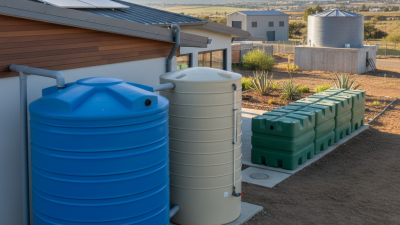
Polyethylene (Plastic) Molded, typically seamless polyethylene; commonly available in above-ground shapes and sizes. Homes, farms, rainwater collection, and small commercial sites. Lightweight, corrosion-resistant, and generally straightforward to transport and install. Check UV protection, temperature limits, installation requirements, and potable-water certification where drinking water is stored. Large tanks may need careful support and anchoring.
Fiberglass (FRP) Glass-fiber-reinforced plastic, made as a molded or assembled tank. Industrial, agricultural, and commercial water storage, including some potable-water applications. Resists corrosion and can be lighter than concrete or steel of comparable use. Confirm resin and lining compatibility with the water and site conditions. Protect from impact and follow the manufacturer’s foundation and installation guidance.
Stainless Steel Fabricated steel panels or welded plate, with the alloy selected for the service environment. Commercial buildings, food-related facilities, and applications requiring a cleanable tank interior. Durable, non-combustible, and often suitable for hygienic service when correctly specified. Initial cost can be higher. Select the appropriate stainless grade and inspect welds, fittings, and water chemistry for corrosion risks.
Galvanized Steel Steel protected with a zinc coating; tanks may use bolted panels and an internal liner. Agricultural storage, rainwater collection, and general-purpose water storage. Robust construction and available in a range of sizes and configurations. Coating condition, liner compatibility, water chemistry, and maintenance affect service life. Verify that the complete tank system is approved for its intended water use.
Bolted Steel Factory-coated or lined steel panels assembled on site with fasteners and seals. Municipal, industrial, fire-protection, and large commercial storage. Panels can be transported efficiently and assembled into large-capacity tanks on site. Requires a suitable foundation and trained assembly. Review coating or lining specifications, joint details, inspection access, and local structural requirements.
Welded Steel Steel plates joined by welding, often fabricated or erected at the installation site. Large fixed installations for utilities, industry, and fire-water supply. Strong, durable construction that can be designed for substantial storage requirements. Site welding, corrosion protection, and quality inspection are important. Consider access for maintenance and the cost of future coating or lining repairs.
Concrete (Above Ground) Cast-in-place or precast reinforced concrete, sometimes with a protective interior coating. Municipal, institutional, and large-site water storage. High structural mass and durability; can be suited to large, permanent installations. Requires engineered foundations and construction. Check crack control, waterproofing, water-quality compatibility, and access for inspection and repairs.
Underground Concrete Reinforced concrete vessel installed below grade, with access covers and service connections. Rainwater, stormwater, fire-water, and other storage where surface space is limited. Uses below-ground space and can be protected from direct sunlight and some temperature swings. Assess soil and groundwater conditions, buoyancy, traffic loads, waterproofing, and safe maintenance access. Confirm the tank is designed for the intended water use.
Elevated Water Tank A tank mounted on a tower, stand, or elevated structure; the vessel may be steel or another suitable material. Water distribution systems and sites needing gravity-fed pressure or reserve storage. Elevation can provide water pressure by gravity and help maintain supply during peak demand. Requires structural engineering, wind and seismic review where applicable, and safe access. Include inspection, corrosion protection, and fall-prevention provisions.
Flexible Bladder Flexible, coated-fabric bladder supported on a prepared surface or within a containment area. Temporary or deployable storage, remote sites, and some agricultural or emergency uses. Can be transported compactly when empty and may be installed without a rigid tank structure. Choose a model rated for the intended water and exposure. Protect it from punctures, abrasion, heat, and unsuitable ground; inspect routinely and plan for secure containment.

Note: Suitability for drinking water depends on the tank’s materials, coatings, fittings, installation, and applicable local approvals. Confirm these requirements with the supplier and relevant authorities before purchase.

Comparing Tank Materials, Capacity, and Installation Requirements

The ten common choices are welded steel, bolted steel, reinforced concrete, prestressed concrete, fiberglass, polyethylene, polypropylene, stainless steel, wood, and flexible bladder tanks. Their usable capacity depends on demand, pressure, reserve needs, and site constraints; material alone cannot set tank size. Small sites differ. The U.S. EPA’s 2023 Drinking Water Infrastructure Needs Survey and Assessment estimates $625 billion in drinking-water infrastructure needs over 20 years. That figure covers multiple system components, not tanks alone, but underscores why capacity planning and lifecycle costs matter.

AWWA standards address welded steel (D100), bolted steel (D103), prestressed concrete (D110), and fiberglass-reinforced plastic (D120) tanks. Steel tanks suit many large installations, but require a prepared foundation and often cranes or field assembly. Concrete offers substantial capacity, though its weight and curing time can complicate construction. Fiberglass and plastic tanks are lighter and useful for smaller sites; check support, UV exposure, and anchoring against buoyancy. Stainless steel can resist corrosion, while wood needs regular inspection. Bladder tanks deploy quickly, but are generally better for temporary or limited-space storage than permanent, high-volume service. Compare delivered capacity, access for maintenance, foundation design, and replacement costs—not just purchase price. I’d still verify local soil and access conditions before choosing; a tank that fits a catalogue may not fit the site.

How to Choose a Tank for Your Water Storage Needs

Choose a tank by matching usable capacity to daily demand, refill rate, and the length of any supply interruption. The USGS report Estimated Use of Water in the United States in 2015 puts average domestic use at about 82 gallons per person per day. For four people, that is a rough benchmark of 328 gallons daily—not a universal household rule. Irrigation, livestock, and seasonal use can change the figure sharply. A rough estimate can still be wrong.

Material and location matter just as much. Polyethylene tanks are relatively light and resist corrosion; steel and concrete options may suit larger, fixed installations. For drinking water, verify that the tank and fittings are certified for potable-water contact, such as to NSF/ANSI/CAN 61. Check the foundation, delivery access, inlet height, overflow route, and space for cleaning. A tank that fits on paper may not fit through a side gate.

The US Environmental Protection Agency estimates household leaks waste nearly 10,000 gallons of water annually on average. That is a useful reminder to include inspection and maintenance in the plan, not just capacity. Compare expected inflow with demand, and leave practical reserve rather than filling every available gallon into the calculation. Keep stored water shaded where possible, and check local water-quality guidance for treatment and turnover needs. The right size may feel conservative. That is often better than running dry.