Search

China Top Waste Water Tank Manufacturers for Global Buyers?

Choosing among China’s top waste water tank manufacturers requires more than comparing prices. Global buyers must examine materials, production controls, export experience, and after-sales support. A reliable supplier should explain tank capacity, wall thickness, corrosion resistance, and expected service life clearly. These details matter when a tank will hold sewage, industrial effluent, or treated process water for years.

Common options include HDPE, FRP, stainless steel, and coated carbon steel tanks. Each material suits different temperatures, chemicals, installation conditions, and budgets. Experienced manufacturers can provide drawings, welding or molding records, pressure-test results, and inspection photographs. They should also confirm whether the waste water tank complies with the buyer’s required technical standards and local installation rules.

Factory visits can reveal useful details. Look at resin storage, steel preparation, joint finishing, labeling, and packing methods. Ask how the company handles damaged parts and replacement requests. References from comparable projects are valuable, but they should be verified rather than accepted without question. No supplier is perfect. Even a strong manufacturer may have communication gaps, delayed documents, or limited experience in a specific region. That risk deserves attention.

This guide introduces leading Chinese manufacturers through practical evaluation points. It considers product quality, customization, production capacity, certifications, delivery reliability, and technical service. Buyers can use these criteria to build a realistic shortlist. The lowest quotation may not offer the lowest total cost. A poorly specified tank can create installation delays, leakage concerns, and expensive maintenance later. Careful questions create better purchasing decisions.
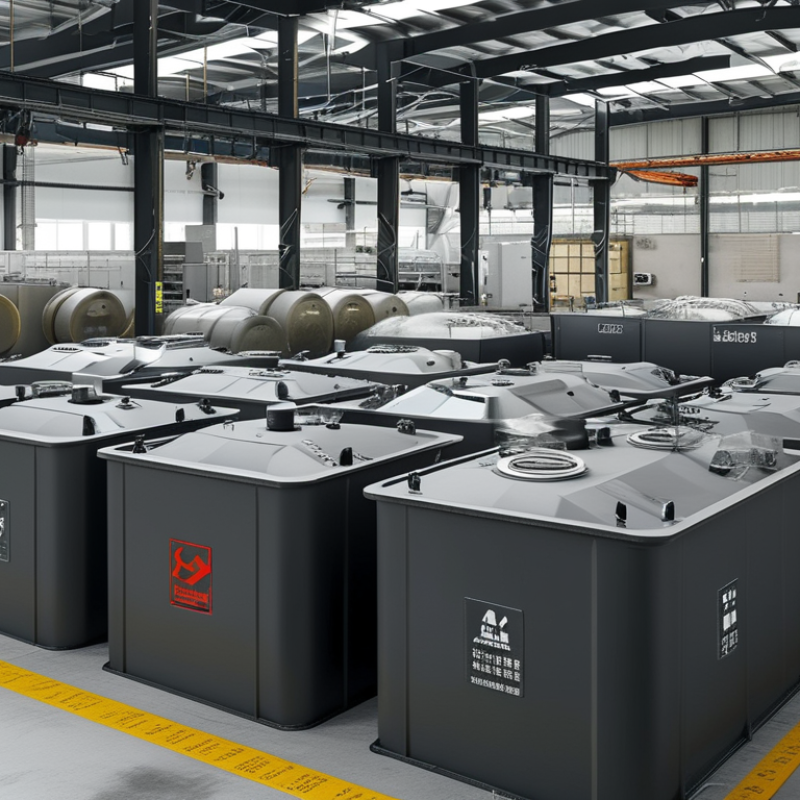
China Top Waste Water Tank Manufacturers for Global Buyers?

What Are Wastewater Tanks and Why Do Global Buyers Need Them?

Wastewater tanks are engineered vessels that collect, balance, treat, or temporarily store used water. They may serve homes, factories, farms, hotels, and municipal facilities. Typical materials include reinforced concrete, polyethylene, fiberglass-reinforced plastic, and coated steel. Each option reacts differently to chemicals, sunlight, pressure, and temperature.

Global buyers need these tanks because wastewater flows rarely remain constant. A factory may discharge heavily during one shift, while a hotel produces uneven daily volumes. An equalization tank smooths these changes before biological or chemical treatment begins. A settling tank allows solids to separate. A storage tank provides controlled holding capacity during maintenance or peak inflow.

Capacity alone is not enough. Buyers should check working volume, emergency capacity, inlet design, ventilation, access covers, and cleaning arrangements. Soil conditions also matter for buried tanks. A supplier should provide material certificates, weld or laminate inspection records, leak-test results, and drawings showing connections. Export projects require careful review of local environmental rules and electrical requirements.

A practical mistake is choosing the lowest quoted price. It can create higher installation and maintenance costs later. I have also seen specifications ignore seasonal temperatures. That can weaken seals or change treatment performance. Clear drawings help. So do independent inspections. Reliable manufacturers should explain limitations, not only advertise strength. A tank is not a complete treatment system. Its value depends on correct sizing, safe installation, and regular monitoring.

China Top Wastewater Tank Manufacturers for Global Buyers

What Are Wastewater Tanks and Why Do Global Buyers Need Them?

Wastewater tanks are engineered vessels used to collect, equalize, biologically treat, clarify, or temporarily store wastewater before discharge or reuse. The chart shows common hydraulic retention-time ranges used in wastewater system design. Longer retention gives biological processes and solids separation more time to work, helping global buyers select tank capacity according to flow rate, treatment objectives, site conditions, and local discharge regulations.

Reference basis: representative engineering ranges commonly used in municipal and industrial wastewater design; actual values vary by wastewater characteristics, treatment technology, temperature, and regulatory requirements.

Key Types of Wastewater Tanks Made in China

China Top Waste Water Tank Manufacturers for Global Buyers

Chinese manufacturers produce several wastewater tank types for municipal, industrial, and commercial projects. The right choice depends on wastewater chemistry, flow variation, ground conditions, and local installation rules.

HDPE and PP tanks suit many corrosive applications. Their smooth interiors resist rust and reduce sludge buildup. They are often fabricated as modular units, which helps when shipping space is limited. FRP tanks offer strong corrosion resistance with relatively low weight. They can serve as chemical storage, equalization, or treatment vessels. However, resin quality and laminate thickness require careful verification.

Carbon steel tanks provide structural strength for large-volume storage. Internal coatings or liners protect the steel from aggressive wastewater. Stainless steel tanks support hygienic or demanding environments, but their higher cost needs technical justification. Concrete tanks remain practical for permanent underground systems, especially where local construction teams are experienced. They need proper waterproofing and joint treatment.

In supplier evaluations, I check drawings, weld procedures, material certificates, and factory inspection records. Load calculations matter, especially for buried tanks and high wind areas. Ask for testing details, including leakage checks and coating adhesion results. A low quotation can hide weak accessories or unclear installation responsibility.

No tank is perfect.

I have seen projects focus on shell thickness while ignoring ventilation, access covers, and maintenance clearance. Those details later caused avoidable delays. Clear specifications and witnessed inspections make international purchasing more reliable.

How Chinese Wastewater Tank Manufacturers Produce Their Products

Chinese wastewater tank manufacturers usually begin with site data, not a standard catalog model. Engineers review flow rate, wastewater chemistry, ground conditions, and installation space. They then prepare drawings for approval.

Production differs by material.

FRP tanks may use resin, fiberglass layers, and controlled winding or hand lay-up. Steel tanks are cut, welded, polished, and protected with internal coatings. HDPE tanks are formed through rotational molding or welded sheets. Workers install manholes, flanges, ladders, baffles, and inspection ports. Each opening must match the approved drawing. A small error can delay an entire installation.

Factory quality checks often include dimensional inspection, visual checks, weld testing, and water-leak testing. Some manufacturers also verify wall thickness and coating adhesion. Ask for inspection records, material certificates, and recent project evidence.

Tips: Confirm chemical resistance, tank capacity, connection sizes, and delivery conditions before ordering. Request a pre-shipment inspection.

No process is flawless. Clear communication still prevents many avoidable problems.

Quality Standards and Certifications for International Markets

International buyers should evaluate wastewater tank manufacturers through documented quality systems, not attractive brochures. ISO 9001 certification shows controlled production, inspection records, and corrective actions. ISO 14001 can indicate responsible environmental management, although it does not certify tank performance.

Certification scope matters greatly. A factory may hold ISO certification, while the specific tank has no independent product approval. Ask for material certificates, dimensional records, weld inspection reports, and leak-test results. For tanks used in European projects, applicable EN requirements and CE obligations should be reviewed by product type. Other markets may require ASTM, AWWA, or local engineering standards. Requirements differ.

Details reveal manufacturing experience. Check resin or steel traceability, wall thickness, reinforcement spacing, UV resistance, and chemical compatibility. Request test conditions, not only pass statements. A hydrostatic test should identify the test duration and water level. Export packaging and installation instructions also deserve attention.

I have seen technically strong tanks delayed because documents were incomplete. That lesson is easy to miss. Certificates should match the factory, model, material, and production date. Independent laboratory reports add credibility, especially for new suppliers. Still, no certificate replaces site assessment and engineering review. Some buyers focus heavily on logos and overlook maintenance access, foundation design, or local discharge rules. That approach needs reconsideration. Reliable manufacturers welcome audits, explain limitations, and provide traceable evidence before shipment.

China Top Waste Water Tank Manufacturers for Global Buyers? - Quality Standards and Certifications for International Markets
Quality Dimension Applicable Standard or Certification What It Covers Typical International Relevance Buyer Verification Evidence Important Qualification
Quality Management ISO 9001:2015 Documented quality-management processes, design or production controls, corrective actions, supplier controls, and continual improvement. Relevant to buyers in most regions when evaluating manufacturing consistency and production traceability. Valid certificate showing the legal manufacturing site, certification scope, certificate number, issue date, and expiry date. Factory system, not product approval
Environmental Management ISO 14001:2015 Environmental aspects, waste management, resource use, compliance obligations, and environmental-improvement procedures. Useful for public procurement, infrastructure projects, and buyers with supplier sustainability requirements. Certificate issued by an accredited or otherwise recognized conformity-assessment body, with the site and scope clearly identified. Does not certify tank performance
Occupational Health and Safety ISO 45001:2018 Occupational health and safety risk management for manufacturing operations and related activities. Often requested during supplier prequalification for engineering, construction, and government projects. Current certificate, audit information, and documented scope covering the relevant production location. Not a material or watertightness test
Plastic Tank Material EN 12566 series, where applicable Performance requirements and test methods for small wastewater treatment systems and related components, depending on the specific part of the series. Relevant mainly to packaged or small domestic wastewater treatment systems sold in European markets. Applicable test reports, declared performance, installation instructions, and technical documentation for the exact model. Applicability depends on product type and capacity
Fiberglass-Reinforced Plastic Tanks EN 13121 series, where applicable Requirements for shop-fabricated glass-reinforced plastics tanks and vessels, including design, manufacture, inspection, and testing provisions. Relevant for certain above-ground or underground GRP/FRP tanks and vessels supplied to European projects. Design calculations, laminate specifications, inspection records, dimensional checks, and project-specific test reports. Not automatically applicable to every GRP tank
Potable-Water Contact NSF/ANSI/CAN 61, where applicable Health-effects requirements for materials, components, and systems that come into contact with drinking water or drinking-water chemicals. Important only when a tank may contact drinking water; it is generally not the primary requirement for ordinary wastewater storage. Certification listing or product-specific compliance documentation for the exact material, component, and intended use. Wastewater use is not the same as potable-water use
United Kingdom Market UKCA or other applicable UK product requirements Market-access requirements that may apply to certain construction products, equipment, or packaged systems placed on the Great Britain market. Relevant for products supplied to England, Scotland, and Wales; Northern Ireland may follow different arrangements depending on the product and regulation. Declaration of conformity or performance, technical file, applicable designated standards, and required marking information. Requirement varies by product category
European Economic Area CE marking, where legally applicable Manufacturer declaration that the product meets the applicable European Union harmonized legislation and conformity-assessment requirements. Relevant only when the tank or packaged system falls within legislation requiring CE marking. Declaration of Performance or Declaration of Conformity, technical documentation, applicable standards, and notified-body information when required. CE is not a universal quality mark
Structural Design Project-specific design codes and engineering calculations Resistance to soil pressure, groundwater uplift, traffic loads, wind, seismic conditions, temperature, and operating loads. Essential for buried tanks and for projects with unusual soil, groundwater, climate, or loading conditions. Signed calculations, design drawings, material properties, installation method, backfill requirements, and site assumptions. Must match the project site
Leak-Tightness Applicable national or project test procedure Verification of tank integrity, joints, penetrations, covers, pipe connections, and resistance to leakage under specified conditions. Required by many municipal, industrial, and environmental projects before commissioning. Factory inspection records, hydrostatic or vacuum test reports where specified, inspection checklist, and acceptance criteria. Request model-specific results
Chemical Compatibility Material compatibility assessment Resistance to sewage, acids, alkalis, oils, cleaning agents, industrial chemicals, temperature, and biological degradation. Particularly important for industrial wastewater, landfill leachate, food processing, and high-strength effluent. Resin or polymer data sheets, chemical-resistance charts, temperature limits, concentration assumptions, and warranty conditions. Depends on actual wastewater composition
Welding and Fabrication Qualified welding procedures and personnel, where applicable Controls for thermoplastic welding, steel fabrication, or other joining methods used in tank construction. Important for fabricated PE, PP, PVC, carbon-steel, and stainless-steel tanks with welded seams or fittings. Welding procedure specifications, operator qualifications, inspection records, and non-destructive testing reports when required. Evidence should cover the supplied material
Traceability Batch, serial-number, and material traceability controls Ability to link raw materials, production records, inspections, accessories, and final documentation to the delivered tank. Valuable for warranty claims, regulated projects, replacement parts, and long-term asset management. Serial number, batch records, material certificates, inspection release note, packing list, and final data book. Recommended for every export order
Export Documentation Commercial and technical shipping documentation Product drawings, datasheets, installation manuals, packing details, certificates, inspection records, and applicable customs documents. Reduces customs delays and supports installation, commissioning, and local authority review. Document index, approved drawings, invoice, packing list, certificate of origin when required, and signed inspection release. Confirm language and legalization needs
Warranty and After-Sales Support Written commercial warranty and service procedure Defined coverage for manufacturing defects, exclusions, design assumptions, installation responsibilities, and claim procedures. Important for remote projects, buried tanks, replacement planning, and long-term wastewater infrastructure. Signed warranty terms, spare-parts list, installation support plan, response times, and clearly stated operating limits. Review before purchase order

How to Evaluate and Select a Reliable Chinese Manufacturer

China Top Waste Water Tank Manufacturers for Global Buyers?

How to Evaluate and Select a Reliable Chinese Manufacturer

Selecting a Chinese wastewater tank manufacturer requires more than comparing quotations. Check the factory’s production experience, engineering team, and export history. Ask for project references in climates similar to yours. Coastal sites need stronger corrosion protection. Cold regions may require special impact resistance. Request drawings showing tank dimensions, wall thickness, fittings, and access points.

Material quality deserves close attention. For plastic tanks, verify resin grades, UV resistance, and welding methods. For fiberglass tanks, examine reinforcement layers and resin specifications. Ask whether each tank receives a documented leakage test. A reliable supplier should provide inspection records, material certificates, and clear acceptance criteria. Standards such as ISO, EN, ASTM, or local requirements may apply. Confirm this with an independent engineer.

Do not rely on showroom photographs alone. I once treated clean factory images as strong evidence, but they proved little about daily quality control. A live video audit can reveal storage conditions, welding areas, testing equipment, and unfinished products. Request a sample inspection before mass production. Confirm packaging, loading plans, spare parts, installation guidance, and response times after delivery. Payment terms should match verified milestones. Small details matter. A missing gasket can delay an entire installation. Ask difficult questions early, and record every technical promise in the contract.