Who Are the Top Steel Water Tank Manufacturers in China?
Choosing among China’s top steel water storage tanks manufacturers requires more than comparing factory size or export claims. Buyers must examine engineering experience, weld quality, coating systems, testing records, and after-sales support. A reliable manufacturer should explain tank design clearly, including capacity, water temperature, foundation conditions, seismic requirements, and local installation risks. Small details matter. A poorly protected flange can become a costly maintenance problem.
Dr. Peter Gleick, a leading water infrastructure expert, said, “The world’s water crisis is a crisis of management, not one of scarcity.” His observation also applies to steel water storage tanks. Good storage depends on responsible planning, accurate fabrication, and disciplined maintenance. China has many capable manufacturers, but their strengths are not identical. Some focus on bolted galvanized tanks, while others specialize in epoxy-coated, stainless steel, or welded structures. Factory automation may improve consistency, yet it does not replace experienced inspection.
This guide examines leading Chinese manufacturers through practical criteria. It considers material traceability, production capacity, certification, project references, delivery performance, and technical communication. Photographs of a clean workshop can help, but they are not proof of long-term durability. That is an uncomfortable point. Buyers should request drawings, coating specifications, inspection reports, and customer references before signing a contract. The strongest supplier is not always the cheapest. It is the one that matches the tank to the project, explains limitations honestly, and remains accountable after installation.
How to Evaluate Steel Water Tank Manufacturers in China
How to Evaluate Steel Water Tank Manufacturers in China
China’s large manufacturing base does not guarantee reliable tank quality. The World Steel Association reported 1.89 billion tonnes of crude steel production worldwide in 2023. This scale supports supply, but material consistency still requires verification. Request heat numbers, mill certificates, and weld traceability for every major component. A serious manufacturer should also explain its steel grade selection, coating system, and corrosion allowance clearly.
Begin with evidence, not attractive brochures. During a factory visit, inspect welding seams, flange alignment, plate storage, and coating preparation. Ask for ultrasonic or radiographic weld records, hydrostatic test results, and coating thickness readings. AWWA D100, ISO 9001, and NSF/ANSI/CAN 61 can provide useful evaluation references, depending on the project location and water application. The 2023 WHO/UNICEF Joint Monitoring Programme reported that 2.2 billion people lacked safely managed drinking water in 2022. Poor tank construction can worsen that risk through leakage or contamination.
Check whether the supplier performs wind, seismic, foundation, and overflow calculations. Confirm delivery packaging and on-site installation responsibility in writing. An independent inspection is worth the cost. It may reveal small problems before they become expensive ones. Certificates can be genuine, yet outdated or unrelated to the proposed tank. I have seen specifications copied between projects, with no adjustment for local climate. That should invite questions. A manufacturer’s response to technical criticism often shows more than its sales presentation.
Leading Chinese Steel Water Tank Manufacturers to Consider
China has become a major sourcing center for steel water tanks, serving factories, farms, hospitals, and municipal projects. The leading Chinese manufacturers usually offer more than standard tank production. They provide engineering support, material selection, fabrication, coating, delivery, and installation guidance.
When comparing manufacturers, inspect their production experience and quality controls. A reliable factory should explain its steel grade, welding method, panel thickness, and corrosion protection clearly. Ask for inspection records, welding procedures, leak-test results, and project references. Photos help, but detailed documentation matters more. It reveals how the factory works when nobody is watching.
Look for manufacturers that produce hot-dip galvanized, epoxy-coated, or stainless steel tanks for different water conditions. Custom dimensions, internal partitions, ladders, flanges, and access covers can reduce installation problems. Some suppliers also calculate wind loads, seismic requirements, and foundation loads for specific locations. That technical support is valuable.
Do not choose by price alone.
A very low quotation may exclude transport, testing, or site support. Confirm the complete scope before signing. Check export experience, packaging methods, spare parts, warranty terms, and communication speed. English drawings should be reviewed carefully, because small wording errors can create costly misunderstandings. No manufacturer is perfect. However, responsive communication and transparent corrective action often show stronger reliability than polished advertising. A factory visit or independent inspection can expose details that online catalogs cannot.
Key Products and Technologies Offered by Top Manufacturers
Top steel water tank manufacturers in China are often distinguished by their products and production technologies. Many provide sectional bolted tanks for municipal water, fire protection, and industrial storage. These tanks use galvanized steel, stainless steel, or coated panels. Factory-made sections can reduce installation time. They also simplify transport to remote construction sites.
Advanced manufacturers use CNC cutting, automated welding, and controlled coating lines. Some produce epoxy-coated, hot-dip galvanized, or glass-fused steel tanks. Each option suits different water conditions. Glass-fused surfaces resist corrosion and support long service life. Stainless steel performs well in demanding environments, but it usually costs more. Reliable suppliers should provide material certificates, coating thickness reports, weld inspection records, and leak-test results. Engineers may also review wind, seismic, foundation, and temperature requirements before production. No design is perfect. A missed drainage detail can still create maintenance problems.
Tips: Ask for a complete technical drawing before ordering. Check panel thickness, bolt quality, gasket material, ladder design, and overflow capacity. Request installation photographs from comparable projects. Clear documentation matters. A low price may hide thinner coatings or weaker accessories. Buyers should also confirm cleaning access and future replacement procedures. These small details often decide whether a tank remains dependable after years of daily use.
The chart compares commonly offered steel water tank technologies by representative project capacity range. Bolted sectional tanks are widely used for modular installation, welded carbon-steel tanks support large storage projects, stainless-steel tanks are selected for hygiene and corrosion resistance, and galvanized-steel tanks are commonly used for smaller utility applications. Actual capacity depends on design standards, site conditions, water quality, and project requirements.
Quality Standards, Certifications, and Production Capabilities
China’s leading steel water tank manufacturers should be judged by verified production controls, not factory size alone. The World Steel Association reported China’s crude steel output at about 1.02 billion tonnes in 2023. This scale supports strong material availability and fabrication capacity. It does not automatically guarantee tank reliability.
A serious manufacturer should provide ISO 9001 quality records and ISO 3834 welding controls. For welded steel tanks, AWWA D100 offers practical requirements for design, inspection, welding, and testing. EN 1090 may also matter when structural steel fabrication enters the project. ISO 12944 coating classifications help specify protection against humidity, chemicals, and coastal corrosion. The ISO Survey 2022 recorded more than one million ISO 9001 certificates worldwide. Certification helps, but it is only a starting point.
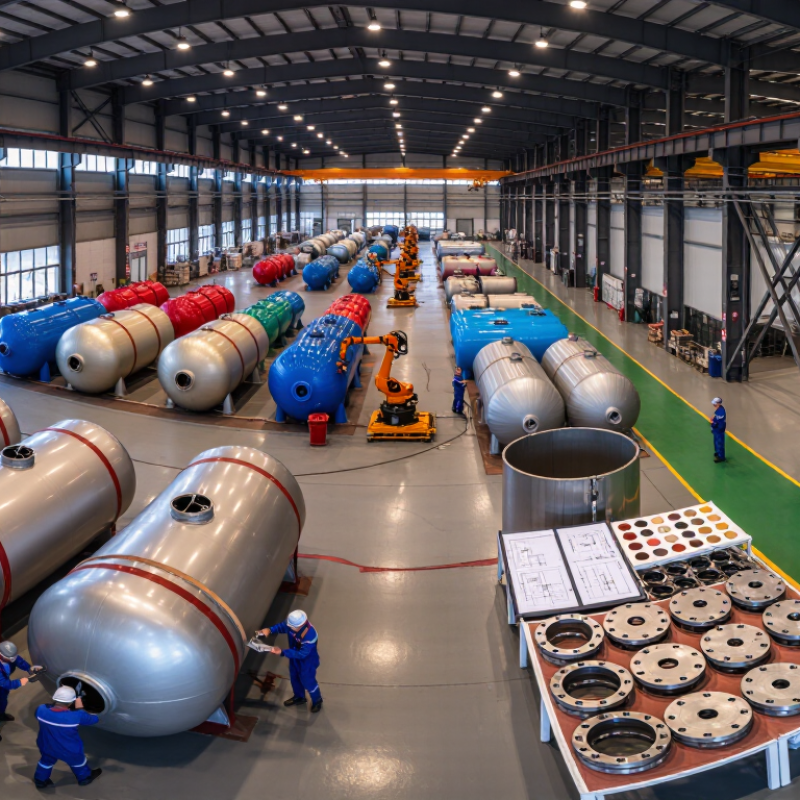
Production capability becomes visible on the workshop floor. Look for CNC cutting, controlled welding procedures, calibrated torque tools, and traceable steel heat numbers. Tank panels should show consistent weld beads, clean edges, and documented non-destructive testing. Independent inspectors can verify coating thickness at several points, including corners and bolt holes. This detail is often missed. It should not be.
Experienced buyers should request mill certificates, weld maps, pressure or leakage test records, and recent inspection reports. A manufacturer may claim large annual capacity, yet lack enough trained welders during peak orders. That weakness deserves attention. Factory visits, sample testing, and contract-defined acceptance criteria provide stronger evidence than polished brochures.
How to Select the Right Chinese Steel Water Tank Supplier
Choosing the right Chinese steel water tank supplier requires more than comparing prices. A reliable manufacturer should provide clear drawings, material certificates, weld procedures, and production photographs. Ask whether the tank uses certified steel grades, suitable internal coatings, and corrosion-resistant external protection. These details affect service life, especially in humid coastal areas.
Inspect the factory through a live video call or an independent audit. Look for clean welding lines, calibrated cutting equipment, organized storage, and pressure or leakage testing records. Request a sample inspection report before placing an order. The report should mention plate thickness, bolt quality, coating thickness, dimensions, and test results. A polished website is not proof. Documentation matters more.
Discuss installation conditions in detail. Confirm the foundation design, access openings, ladder position, inlet height, drain location, and local water quality. Ask how the supplier handles damaged parts, missing hardware, and technical questions after shipment. A dependable team responds with drawings and practical solutions, not vague promises. Check production capacity against your schedule, but do not reward rushed work. I have seen small measurement errors create difficult installation changes. No checklist is perfect. Site conditions can expose hidden assumptions. Select a supplier willing to review those risks openly and revise specifications when evidence requires it.